
Ever stepped onto a trade show floor and felt that sinking feeling of skepticism from potential clients? I remember my first few attempts at magic tricks during networking events. Instead of building trust, I often felt like I was just performing for myself—missing the real connection. That lightbulb moment hit me hard: it’s not just about doing tricks; it’s about creating an immediate bond of trust with your audience.
The Power of Sleight of Hand in Trade Show Magic
Over time, I discovered that mastering simple yet effective sleight of hand techniques can instantly make you appear more trustworthy and engaging. These tricks serve as social proof—showing competence, confidence, and warmth—all in a few seconds. But here’s the catch: not all tricks are created equal. The difference lies in the subtlety and intent behind each move. When done right, they can turn a casual observer into a captivated supporter, eager to hear what you have to say.
Want to learn how to harness this power? Today, I’ll share proven strategies that helped me elevate my trade show game. From selecting the right tricks to executing them flawlessly, this is your roadmap to establishing trust fast. If you’ve ever felt overlooked or unsure how to break the ice, stick around. By the end, you’ll see that a few well-practiced sleight of hand moves can be the key to opening doors and sealing deals.
Is Sleight of Hand Magic Really Worth the Hype?
When I first heard about using magic tricks to build trust, I was skeptical. I thought, “Isn’t that just gimmicks?” I made a mistake early on—trying to impress with complex illusions without understanding the importance of simplicity and connection. That approach backfired, leaving me feeling awkward and untrustworthy. Real trust-building magic is about authenticity, not showmanship. I learned that the most effective tricks are those that feel natural and are executed with confidence. For more insights, check out trustworthy sleight of hand magic for trade show impact.
Choose the Right Tricks for Instant Connection
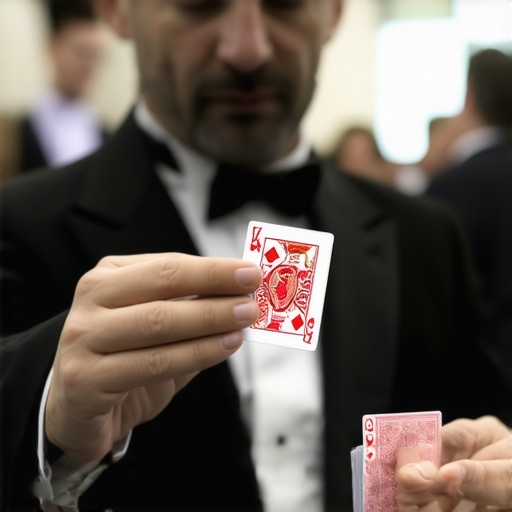
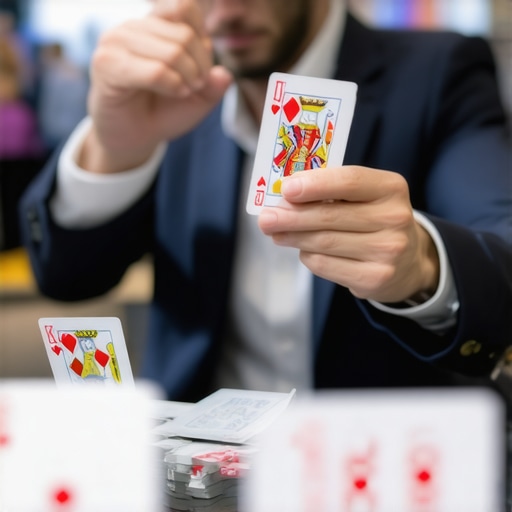
Start with simple, visually impressive tricks that are easy to execute smoothly. My first success came from a coin vanish—just a quick, clean move that caught people’s attention immediately. Focus on tricks that demonstrate competence without overcomplicating. For instance, a classic card flip or a ring link can be surprisingly effective when performed confidently. Check out best interactive show secrets to discover more ideas.
Practice with Purpose
Repetition is key. Dedicate time to perfect each move until it feels natural. When I first practiced a thumb palm move, I fumbled multiple times, making the trick look awkward. But after a few dozen repetitions, it became second nature. Remember, the goal is to make your sleight of hand invisible—so focus on smoothness and timing. This is how you build trust through mastery, not just raw skill. For detailed tips, review sleight of hand secrets.
Execute Moves with Confidence
Confidence is like the bridge connecting you to your audience. Even if your move isn’t perfect, performing it with certainty makes it convincing. I remember once doing a quick vanish in front of a skeptical client; my shaky hands almost gave it away. But I recovered by maintaining eye contact and delivering a confident smile. That moment reinforced how crucial body language and tone are. Practice in front of a mirror or record yourself. For more insights, explore mastering sleight of hand for trust.
Use Natural Gestures to Enhance Impact
Don’t just perform tricks—incorporate natural gestures that reinforce trust. When I show a coin, I often gesture towards the audience or make a point about honesty. These subtle cues make your magic feel more genuine. Think of your hands as storytellers—every movement should add to your narrative, not distract. The goal is to make your tricks seem like effortless extensions of your personality. For more advanced techniques, see secrets for trust.
Master Timing for Maximum Effectiveness
Timing can make or break a trick. I learned this the hard way with a quick coin flip that fell flat because I rushed. Instead, pause just before revealing the trick’s climax—this builds anticipation. When I finally slowed down, the audience’s reaction was electric. Think of your hand movements as a dance—each step needs to be deliberate. Practice your timing until it feels natural, and you’ll establish trust faster. Check out mastering timing in magic for more tips.
Many practitioners and enthusiasts believe that mastering complex sleight of hand moves automatically translates to better trust-building at trade shows. However, this is a misconception that can lead to costly mistakes. In my experience, trying to impress with overly complicated tricks often backfires, creating distance rather than connection. The truth is that simplicity combined with genuine confidence is far more effective in establishing trust quickly.
Another frequent myth is that flawless execution is the only thing that matters. While precision is important, it’s equally crucial to understand the audience’s perception. A move performed perfectly but devoid of emotion or authenticity can seem mechanical and insincere. The real skill lies in blending technical mastery with natural, relatable gestures that resonate on a human level. This nuance is often overlooked by beginners who focus solely on perfecting the mechanics.
One of the most common traps is the idea that more tricks mean more trust. In reality, bombarding your audience with a barrage of illusions can dilute the impact of each one, making you appear less credible. Instead, selecting a few well-chosen, impactful tricks and executing them with confidence creates a much stronger impression. For advanced practitioners, it’s about quality over quantity. For insights on how to refine your approach, see secrets for trust.
Why Some Tricks Are Less Effective Than You Think
Many believe that flashy, complex tricks are essential to wow the audience. But studies and expert opinions, such as those from Dr. Richard Wiseman, suggest that audience engagement hinges more on your ability to connect emotionally than on the trick itself. An overly complicated move can distract or confuse, reducing the perceived sincerity of your performance. Instead, focus on tricks that demonstrate competence while allowing room for natural interaction. For example, a simple coin vanish performed with a confident smile can be more impactful than a complex illusion executed poorly. For more advanced strategies, explore mastering sleight of hand for trust.
Ultimately, the key is to understand that in trade show magic, authenticity beats complexity every time. Avoid the trap of equating elaborate tricks with trustworthiness. Instead, master a handful of well-practiced, genuine moves that reinforce your credibility and approachability. Have you ever fallen into this trap? Let me know in the comments.
Once you’ve mastered the art of sleight of hand, the next crucial step is ensuring your tools stay in top shape for consistent performances. Proper maintenance not only prolongs the lifespan of your equipment but also ensures flawless execution that builds trust with your audience. Today, I’ll share my personal approach to maintaining my magic tools, the software I rely on, and how to keep your skills sharp over time.
How do I keep my magic tools performing reliably?
Firstly, invest in high-quality props. I prefer using professional-grade coins and rings because they withstand frequent handling and last longer. For instance, I swear by Goshman Coins — their durability and weight give me confidence in every trick. Regular cleaning is essential; I use a soft microfiber cloth to wipe down metal props after each gig, preventing tarnish and buildup. For special cleaning, I recommend gentle cleaning techniques that avoid damaging delicate surfaces.
Another key aspect is organizing your tools efficiently. I use a dedicated magic kit with compartments for each prop. This helps me quickly locate what I need and reduces the risk of damage from mishandling or losing items. Additionally, I keep a small toolkit with spare parts and minor repair supplies—like superglue and replacement coins—which are invaluable during live shows.
What software or methods do I recommend for long-term skill growth?
Video recording and analysis have become indispensable in my routine. I record my practice sessions and performances using a good quality camera or even my smartphone. Watching playback helps identify subtle flaws in timing or presentation that I might miss in real-time. I also use editing software like Adobe Premiere Rush to review my videos and track progress over weeks or months. This habit keeps my skills sharp and allows me to fine-tune my techniques continuously.
For ongoing learning, I follow expert channels and courses, such as mastering sleight of hand techniques. These resources often include troubleshooting tips and advanced tricks that keep my routines fresh and engaging.
Future trends in tool maintenance and skill scaling
Looking ahead, I believe automation and smart tech will play a bigger role. Imagine using tiny sensors embedded in props to monitor wear and tear or employing virtual reality (VR) to simulate performance scenarios for practice. These innovations could revolutionize how magicians maintain their tools and scale their skills efficiently. Already, some performers utilize apps to organize routines and track progress, making continuous improvement more manageable than ever.
To get started today, try implementing a routine of recording your practice sessions and analyzing your performance. It’s a simple yet powerful way to maintain your edge and ensure your magic tools perform flawlessly every time. Remember, consistent care and continuous learning are the keys to long-term success in sleight of hand magic.
<
The Hardest Lesson I Learned About Trust in Trade Show Magic
Early in my journey, I believed that complex, flashy tricks would automatically elevate my credibility. I quickly realized that overcomplicating my routine made me appear less genuine and more like a performer chasing applause. The real breakthrough came when I focused on simplicity and authenticity, understanding that trust is built through relatable, confident interactions rather than just impressive illusions.
3 Myths About Trade Show Magic That Held Me Back
One common misconception was that flawless execution was everything. I learned that audience perception matters more than perfection—showing genuine enthusiasm and natural gestures often wins more trust than technically perfect but emotionless tricks. Another myth was that more tricks equal more trust; in reality, strategic selection of a few impactful tricks creates a stronger impression. Lastly, I thought complexity was necessary for engagement, but I found that simplicity paired with confidence resonates deeply with audiences.
What Experts Won’t Tell You About Building Trust with Magic
Many professionals emphasize the technical mastery of sleight of hand, but the secret ingredient is emotional connection. Engaging gestures, eye contact, and natural storytelling amplify the trust-building power of your tricks. Authenticity and relatability often outperform elaborate illusions, especially in the fast-paced, trust-sensitive environment of trade shows. Remember, your audience isn’t just looking for a display of skill—they want to feel connected and confident in you.
My Essential Toolkit for Trade Show Trust Building
High-quality props like Goshman Coins have been my go-to for durability and feel, ensuring consistent performance. I swear by recording my practice sessions with a smartphone and reviewing footage to fine-tune timing and gestures—this keeps my skills sharp and my delivery natural. Additionally, I use dedicated organization kits for props, minimizing mishaps during live performances. For ongoing learning, I follow expert channels and courses, like mastering sleight of hand techniques, which continuously refresh my approach.
Where to Go from Here
Looking ahead, I see technology playing a bigger role in maintaining and scaling skills—think IoT-enabled props or VR practice environments. Start by recording your routines regularly, analyzing your performance, and practicing with purpose. The key to long-term success is a combination of diligent tool maintenance, continuous learning, and authentic engagement. Remember, trust is a two-way street—your confidence, authenticity, and consistency will open the doors to meaningful connections and successful trade show outcomes.


This post really resonated with me, especially the emphasis on authenticity over complexity. I’ve found that audiences respond much better when I focus on engaging with natural gestures and genuine enthusiasm rather than trying to showcase overly elaborate tricks. When I started practicing with simpler moves and added a confident smile, the trust from clients increased noticeably. I especially appreciate the advice on practicing with purpose—repetition truly helps make the moves seamless.
I’m curious, how do others handle nerves when performing sleight of hand in front of a crowd? Sometimes I notice my hands tremble slightly, which can undermine the confidence I want to project. Do you recommend any quick grounding techniques or rituals to boost confidence before a performance? Looking forward to hearing everyone’s tips on this! Thanks for sharing such insightful strategies—definitely a game-changer for my approach.