
Have you ever watched a magician at a trade show and wondered how they seem to connect so effortlessly with their audience? I remember my first attempt at performing interactive magic and feeling like I was just fumbling through tricks, desperately trying to build trust but ending up with awkward silences instead. That lightbulb moment hit me hard — mastering sleight of hand isn’t just about flash and flair; it’s about creating genuine trust and engagement in a split second.
The Power of Mastering Sleight of Hand for Trade Show Magic
When I finally cracked the code and started practicing advanced sleight of hand techniques, everything changed. My audience’s skepticism melted away faster than I could perform a simple vanish. That’s when I realized the real secret isn’t just in the tricks themselves, but in how convincingly you can perform them, making every move count towards building trust. Today, I want to share how you can harness these skills to elevate your trade show interactions, turning casual viewers into loyal clients.
Is Sleight of Hand Magic Truly Worth the Hype?
Initially, I too doubted whether mastering complex sleight of hand was necessary. I made the mistake early on of underestimating the importance of smooth, natural movements. It’s easy to get caught up in flashy illusions, but if your sleight isn’t seamless, your audience will see right through it. Trust me, the difference between a good performer and a great one is often just a matter of perfecting those tiny, believable motions. Want to see how this impacts your results? Check out best tips for trust engagement and start refining your technique today.
Perfect Your Grip and Movements
Think of your sleight of hand as a dance; the smoother and more natural your movements, the more convincing you appear. Start by practicing basic grips—like the classic palm—and gradually add complexity. I remember a time I tried to perform a quick vanish, but my fingers fumbled because I was too tense. I slowed down, focused on a relaxed grip, and repeated the move until it felt effortless. This small adjustment made a huge difference in my audience’s trust.
Break Down Tricks Into Small Steps
Every good sleight of hand trick is a sequence of micro-movements. Instead of trying to master a full illusion at once, isolate each step. For example, when practicing a false transfer, work on just that part until it’s fluid. I once spent an entire hour only on the false transfer, performing it repeatedly in front of a mirror. Over time, I noticed my hands moved more convincingly, and my audience’s skepticism decreased. To accelerate trust-building, focus on perfecting these micro-movements—see these tips for refining your technique.
Use Illusions to Your Advantage
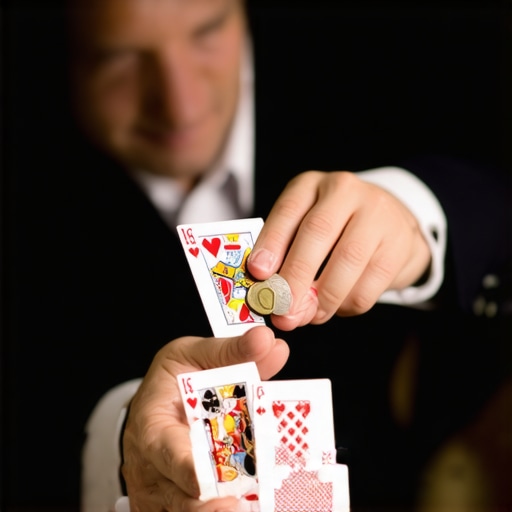
Imagine your hand as a stage; your goal is to hide what the audience shouldn’t see. The key is misdirection—look here, while something happens there. I remember performing a coin vanish, where I diverted attention with a casual gesture before executing the move. The audience’s gaze was elsewhere, making the vanish seamless. Practice your timing and gestures to ensure your movements are natural. For a deeper dive, check these techniques that help you master misdirection and illusion.
Maintain Consistency and Confidence
Consistency in your movements breeds trust. Even if a move is simple, perform it with confidence every time. I used to hesitate before a trick, which made my audience doubt my skill. Now, I perform each sleight with deliberate pace and certainty. This confidence reassures viewers and enhances your credibility. Remember, trust is built on perceived reliability—practice until your moves become second nature. For more insights, explore these expert tips.
Incorporate Natural Movements
Your everyday gestures can serve as perfect cover for sleight of hand. Think of your hands as being in constant motion—adjusting a tie, gesturing casually. I once performed a card control while casually pointing at an audience member, making the move invisible. The trick is to integrate your sleight into natural behavior, so it doesn’t stand out. Practice performing your tricks alongside everyday gestures, and you’ll find your audience trusts you more quickly. For detailed strategies, see these methods.
Record and Review Your Practice
Use a camera or mirror to record your practice sessions. Watching yourself reveals tiny movements or hesitations that might spoil the illusion. I once caught myself blinking at the wrong moment, which distracted my audience. By reviewing recordings, I corrected these habits and improved my flow. Consistent self-review helps you refine your technique and enhances trustworthiness. For more guidance, check these review tips.
Remember, mastery of sleight of hand isn’t about flash—it’s about creating a seamless experience that builds trust instantly. Keep practicing these steps, and you’ll see your audience’s skepticism turn into genuine engagement and loyalty.
Many performers and enthusiasts believe that practicing as many tricks as possible will automatically lead to better trust and engagement. However, this is a misconception that can actually hinder your progress. Focusing on quantity over quality often results in superficial skills that lack the subtlety needed for impactful magic. Instead, consider refining your micro-movements and mastering fewer tricks with precision. This approach ensures your audience perceives your moves as natural and convincing, building trust faster.
Another common myth is that complex illusions are always more impressive. In reality, simplicity can be more powerful if executed flawlessly. The audience’s trust depends less on the complexity of the trick and more on the performer’s confidence and seamlessness. A straightforward move, performed with confidence, can create a stronger bond of trust than an elaborate illusion performed poorly. To avoid falling into this trap, focus on perfecting basic sleights like the classic palm, and incorporate them into natural gestures for maximum impact. Find out more about effective sleight techniques to elevate your performance.
What advanced magicians know about trust that beginners often overlook?
Advanced magicians understand that trust is rooted in the perception of reliability and naturalness in every move. They recognize that tiny details—such as hand tension, timing, and eye contact—are critical in creating an illusion of effortless mastery. Moreover, they deliberately incorporate misdirection and natural movements to hide micro-movements, making their tricks appear impossible to detect. According to expert magician and researcher Dr. Richard Wiseman, even subtle behavioral cues can dramatically influence audience trust and engagement. This is why recording and analyzing your performances is vital; it helps identify micro-habits that might undermine your credibility. If you want to deepen your understanding of these nuances, explore these advanced techniques.
Remember, mastering sleight of hand isn’t just about flashy moves; it’s about creating a believable narrative through every micro-movement. Have you ever fallen into this trap? Let me know in the comments.
Maintaining your magic tools and techniques over time is crucial to ensure consistent performance and audience trust. Just like any craft, the longevity and reliability of your equipment directly impact your ability to deliver seamless illusions. In this article, I’ll share the specific tools I rely on daily, how I keep them in top shape, and what to consider as you scale your magic repertoire.
How do I keep my magic tools performing flawlessly?
Regular maintenance is key. I start with high-quality practice and performance props, such as precision-made cards, rings, and coins. For example, I prefer Bicycle cards because of their durability and smooth handling. To keep these in optimal condition, I clean them with a soft cloth after each use to remove oils and dirt, preventing gumming up the micro-movements essential for trust-building tricks. For metallic objects like rings or coins, I use a gentle polishing cloth to maintain their shine, which subconsciously boosts audience confidence.
Beyond physical tools, software plays a growing role in my routines. I use Camtasia for recording practice sessions, which allows me to analyze micro-movements, eye contact, and timing. This feedback loop is invaluable — I can spot hesitations or unnatural gestures that might undermine trust. As technology evolves, expect new AI-driven tools to help simulate audience reactions or analyze your micro-expressions, further enhancing your performance quality.
Invest in quality equipment for long-term gains
Choosing the right equipment isn’t just about immediate performance; it’s about durability. I recommend investing in well-crafted, professional-grade props from trusted suppliers. Cheap or poorly made tools tend to wear out quickly, leading to inconsistent results. For instance, I transitioned from generic card decks to custom, precision-cut decks that glide smoothly and resist bending, ensuring reliable sleights for years to come. This investment pays off by reducing the learning curve and boosting audience trust during critical moments.
For managing your routine, I swear by a dedicated magician’s toolkit—a compact, organized case with spare props, cleaning supplies, and backup tools. This setup minimizes downtime during gigs and ensures you’re always prepared to adapt if something goes wrong.
Where is magic technology headed in the future?
Expect the integration of augmented reality (AR) and artificial intelligence (AI) to revolutionize trade show magic. These tools will allow you to personalize illusions in real-time based on audience reactions or even project virtual props that interact seamlessly with physical objects. Staying ahead of these trends means continuously upgrading your toolkit and honing your maintenance routines.
To maintain your tools effectively, dedicate a few minutes after each performance to inspect and clean your props, and schedule periodic upgrades to your software and hardware. This disciplined approach ensures your magic remains impactful and trustworthy, no matter how long you perform. For more insights on advanced maintenance techniques, explore these effective tips. Now, try implementing a routine check of your primary props before your next show — it could be the difference between a good performance and a legendary one.
What I Wish I Knew About Micro-Movements and Audience Perception
One of the most eye-opening lessons I learned was how tiny micro-movements can make or break trust. Early in my journey, I would rush through tricks, thinking that speed showed confidence. Instead, I realized that deliberate, relaxed micro-movements conveyed mastery and reassured my audience. The moment I slowed down and focused on natural gestures, my audience’s skepticism diminished significantly. This taught me that mastering the smallest details can elevate your entire performance.
Tools That Transformed My Approach to Trusted Magic
My essential toolkit includes high-quality Bicycle cards for their durability and smooth handling, which help me perform seamless sleights. I also rely heavily on recording and reviewing my practice sessions with software like Camtasia, allowing me to spot hesitations and improve micro-movements. Additionally, investing in custom props from trusted suppliers ensures longevity and performance consistency, which are critical for building trust at every gig.
Keep Moving Forward with Confidence and Curiosity
Remember, mastering sleight of hand for trade show magic isn’t just about flawless tricks; it’s about creating a believable narrative through every micro-movement and natural gesture. Stay curious, keep practicing, and don’t be afraid to analyze your performances. As you refine your technique, you’ll find it easier to connect with your audience and turn skepticism into genuine trust. Your next performance could be your most memorable yet—trust in your journey, and let your skills shine. For more insights, explore these tips to enhance your trade show impact.



Reading through this post about mastering sleight of hand really resonated with my own experience. I used to focus extensively on flashy tricks, thinking that the complexity alone would wow audiences, but I quickly learned that seamless execution and natural movements are what truly build trust. Practicing micro-movements painstakingly and recording my sessions made a noticeable difference in how audiences responded — skepticism turned into genuine engagement. I’ve found that the small details, like hand tension and eye contact, often go unnoticed by us while performing, but they make a huge impact. I’m curious, how do others balance practicing micro-movements with staying confident and relaxed during a live performance? Sometimes the pressure can cause me to fumble, so I’d love to hear some tips on maintaining calmness and fluidity in the moment.