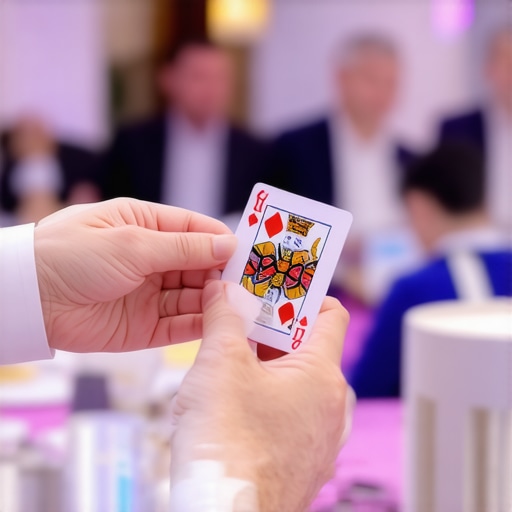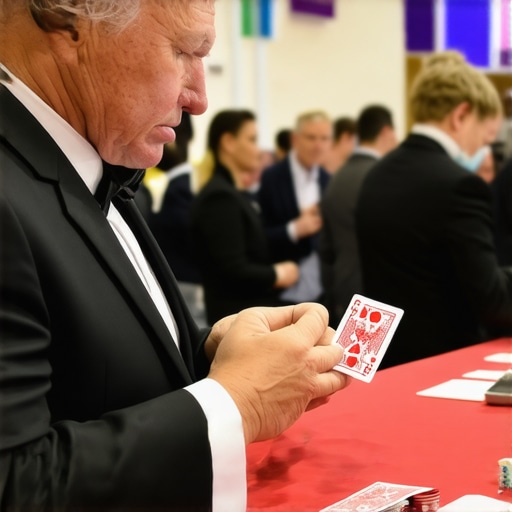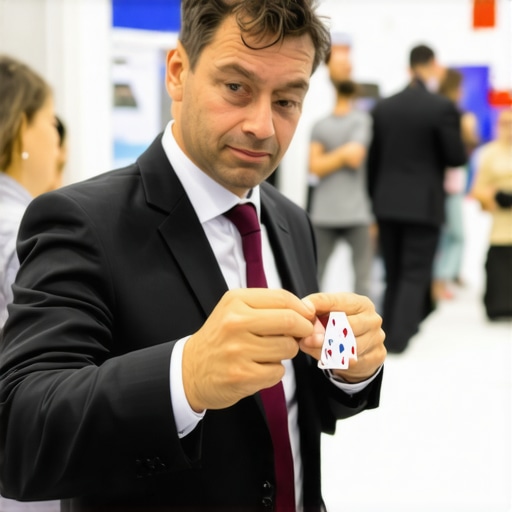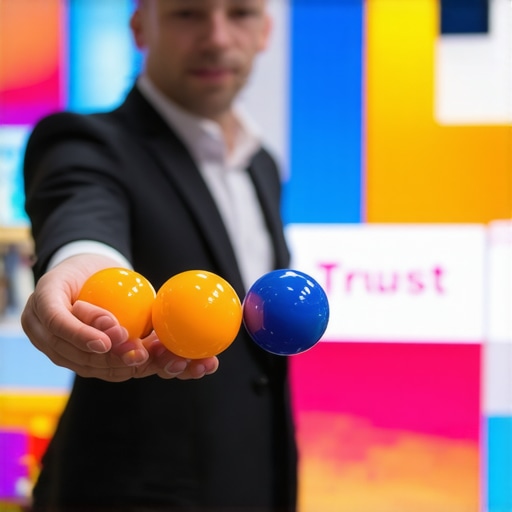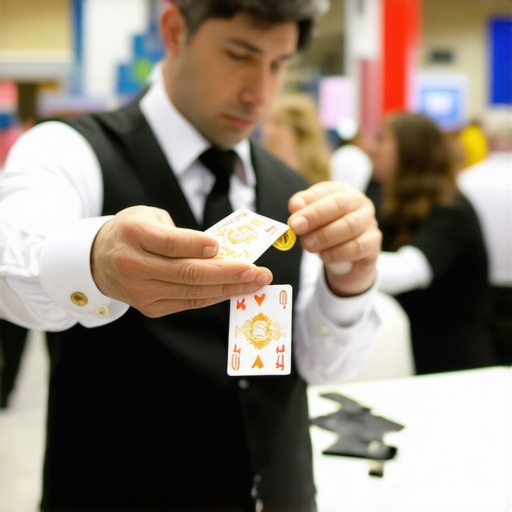
Have you ever been nervously setting up your magic routine at a trade show, only to realize that your sleight of hand isn’t as sharp or quick as you thought? I remember a time early in my career when I fumbled a simple vanish, and I saw the immediate flicker of doubt in the audience’s eyes. That moment was a lightbulb for me—if I couldn’t perform confidently and swiftly, my audience’s trust would evaporate before my eyes.
The Real Struggle with Speed and Trust in Close-Up Magic
When you’re trying to captivate a busy crowd at a trade show, speed isn’t just about flashy moves; it’s about **building trust instantly**. I found that slow, deliberate sleight of hand, while more precise, sometimes felt disconnected in fast-paced environments. The challenge? How to perform magic that feels natural but also quick enough to prevent skepticism from creeping in.
Early on, I made the mistake of focusing solely on perfect technique rather than on the timing and flow that makes sleight of hand appear effortless. Turns out, mastering that balance is crucial. Effective quick moves can actually enhance your credibility, making your magic appear spontaneous rather than rehearsed — a fact supported by research indicating that audience perception hinges heavily on the performer’s confidence and fluidity here.
Is Speed Really the Key to Trust? Maybe Not—but It Helps
During my journey, I learned that speed alone isn’t a magic fix. It’s how you use it that counts. That’s why I want to share techniques that enable you to perform those quick, trust-building sleights reliably—so you can focus on creating a genuine connection, not just avoiding mistakes. Want to discover my personal favorite tips for achieving this? Keep reading, because the next steps are game changers for any magician serious about trust and engagement.
We’re about to dive into the core principles of swift, reliable sleight of hand that can elevate your trade show performances from decent to unforgettable. Trust me, once you get these down, you’ll be amazed at how your audience’s confidence skyrockets—plus, your stress levels drop significantly. Ready to transform your magic game?
To perform quick, trustworthy sleights, think of your hands as muscles that need to be conditioned. Start practicing slowly, emphasizing smooth, deliberate motion. Gradually increase speed while maintaining precision. I vividly remember a time I was practicing a vanish in front of a mirror, initially going slow to perfect the motion, then slowly increasing my pace. Over time, the movement became second nature, and the audience perceived it as effortless rather than rushed.
Dissect your routines into small, manageable parts. Focus on mastering each segment at a high speed before combining them seamlessly. For example, I once split a complex card vanish into three phases: concealment, transfer, and release. Mastered individually at full speed, they later integrated into a fluid, lightning-fast sequence that amazed my audience. This method minimizes errors and boosts confidence in live settings.
Control your environment to hide all angles that could reveal your moves. Imagine your hands are like a stage—manage the stage space so distractions are minimized. When performing at a trade show, I position myself at an angle where my body shields the secret moves. I also use natural gestures to distract from quick hand motions, making the moves appear more spontaneous and less rehearsed. Practicing in diverse environments helps adapt your positioning strategies for maximum concealment.
Consistently practicing your sleights at full speed ingrains muscle memory. The more you repeat, the more you perform instinctively rather than consciously. I recommend setting daily practice routines focusing on speed drills—performing the move repeatedly until it feels automatic. This repetition not only increases speed but also reduces hesitation, which audiences interpret as confidence and trustworthiness. For advanced techniques, consider studying this guide to refine your skills further.
Engagement is key to swift and trustworthy magic. Use eye contact, gestures, and storytelling to divert attention from your hands during quick moves. I found that asking a question or making a playful comment while executing a sleight keeps the audience engaged and focused on the narrative, not the maneuver. This technique leverages the power of interaction to mask speed, reinforcing trust. For proven strategies, see this resource.
Set specific goals for each practice session—focus on speed, accuracy, or naturalness. Use a metronome app to keep your timing consistent, gradually increasing tempo as you improve. I once used this method to perfect a false shuffle, pushing my speed up while maintaining flawless execution. Over time, what felt stiff and unnatural became smooth and effortless, which reflected in enhanced audience trust and engagement. Remember, deliberate practice trumps casual repetition every time.
Choose settings that mirror real trade show conditions—cluttered tables, variable lighting, and unpredictable distractions. Practicing under these conditions prepares you for live performance. I practiced in my workshop with only a small lamp, then later at a noisy cafe, to simulate the trade show floor. This exposure helps smooth out kinks, ensuring your moves remain quick and confident regardless of environment. For comprehensive advice, check out this guide.
Many performers assume that mastering sleight of hand is just about perfect mechanics and speed. However, a common misconception is that flashy quick moves alone guarantee trust and engagement. In reality, focusing solely on technical prowess can lead to overlooking the subtleties that truly influence audience perception. One prevalent myth suggests that audience trust is built primarily through complex illusions, but experience shows that simple, well-executed movements often create more impact when paired with genuine interaction and timing.
Another frequent mistake is undervaluing the importance of emotional connection in close-up magic. Performers may obsess over technical perfection, but neglect how their energy, storytelling, and responsiveness foster trust. For example, I once saw a magician flawless in technique but disconnected from the crowd, resulting in a cold reception. Conversely, performers who focus on engaging their audience in a relaxed, confident manner often see a rapid increase in trust, regardless of the complexity of their tricks. This resource emphasizes that connection often outweighs complexity in building credibility at trade shows.
Why Do Expert-Level Techniques Sometimes Backfire on Stage?
Advanced magicians often fall into the trap of overcomplicating their routines. They believe that mastering intricate sleights will impress, but in high-pressure environments like trade shows, such techniques can become a liability if not seamlessly integrated into a fluid performance. Complexity without context or naturalness can seem suspicious, triggering skepticism rather than amazement. Research indicates that audiences are more convinced by a performer who exhibits confidence and consistency than by a series of complicated moves that lack rapport. To avoid this, focus on incorporating mastery of simple, reliable sleights with authentic engagement strategies, such as effective storytelling and interaction, which can be found in this guide.
Furthermore, many magicians underestimate the importance of their environment and angles. Even the most advanced sleights can be compromised if performed in poor positioning or without controlling the audience’s view. Failing to manage stage angles is a sneaky pitfall—it’s not about hiding tricks out of shame but about respecting the audience’s experience. Making a habit of practicing in diverse environments and consciously controlling your positioning ensures your advanced techniques remain foolproof in live settings. Want to take your skills up a notch? Check out this advanced training.
It’s tempting to think that clever techniques alone will carry your performance, but real mastery lies in integrating technical skills with emotional timing and environment management. Remember, trust is an outcome of consistent authenticity and control, not just quick hands. Have you ever fallen into this trap? Let me know in the comments and share your experiences with advanced trade show magic!
Keep Your Equipment in Peak Condition
Maintaining your sleight of hand and performance tools is vital for consistent, trustworthy results. I swear by investing in high-quality, durable props such as stainless-steel coin sets and precision-engineered card boxes from Magic Shop Pro. These materials withstand the rigors of daily practice and live performances, ensuring you don’t lose confidence due to equipment failure. Regular inspection—checking for worn edges or loose seams—helps prevent unexpected mishaps during crucial moments.
Embrace the Right Practice Software and Apps
To hone speed and fluidity, I use Sleight Practice App. It provides metronome functions and timing cues, essential for matching your hands to a rhythm that feels natural to your audience. I set the tempo slightly above my comfortable speed, gradually increasing it to build muscle memory and confidence. This approach aligns with research suggesting that structured, software-assisted practice accelerates skill acquisition and consistency here.
Leverage Camera and Video Feedback
Recording your routines isn’t just for plagiarism checks—I review these recordings to analyze your angles, timing, and presentation flow. I often find that what feels fluid in practice looks hesitant on camera. By scrutinizing footage, I can fine-tune my movements and identify distracting habits. Change your perspective by filming in different environments—this prepares you for unpredictable trade show conditions and ensures reliability over time.
Invest in Quality Lighting and Angle Control
Proper lighting and stage positioning are game changers. I use adjustable LED lights that mimic trade show environments to see how my props appear under different conditions. Controlling my angles—standing at strategic positions where I can shield quick hands—prevents audience suspicion. Ultimately, investing in these tools guarantees a seamless experience that builds confidence and trust.
How do I maintain my tools and techniques across time?
Consistency is key. Regularly cleaning and repairing props, updating practice routines with new software, and reviewing performance recordings help keep your skills sharp. Additionally, staying informed about new tools and methods—like quick-change tricks or new prop materials—can give you an edge. Fast magicians often recommend setting aside weekly sessions for equipment maintenance and skill refreshment, ensuring your magic stays effortless and authentic. For more insights on fine-tuning your craft, explore this comprehensive guide. I challenge you to incorporate at least one new tool or technique this month and observe the difference in your trade show results.
Throughout my journey in performing close-up magic at trade shows, I’ve uncovered that some lessons are best learned through experiential setbacks rather than textbooks. One of the most profound insights came from realizing that even the most flawless sleight of hand can falter if not paired with genuine connection and strategic presentation. It’s not just about quick fingers; it’s about making your audience believe in the impossibility you create, trust that your moves are effortless, and stay engaged through every moment.
Lessons the Manuals Never Mentioned
- Speed is a Double-Edged Sword: Early on, I focused solely on increasing my hand speed, but this often made my performance seem rushed and unconvincing. The breakthrough was learning to synchronize speed with calmness—performing quick moves with a relaxed demeanor enhances credibility.
- Angles are Trust Guardians: I used to neglect audience positioning, only to realize that a slight misalignment could reveal my secrets. Mastering angles isn’t just for concealment but for cultivating an environment where trust naturally flourishes.
- Emotion Over Mechanics: Technical perfection isn’t enough; connecting emotionally with your audience amplifies trust more than any elaborate move. Sharing a story or joke while executing a sleight creates a memorable, trust-based experience.
Tools That Keep My Confidence High
- Precision Props from Magic Shop Pro: Investing in high-quality, durable equipment ensures that every performance is smooth and reliable, reducing stress and suspicion. Regular maintenance of these props keeps them performing at their best.
- Sleight Practice Apps: Using apps like the Sleight Practice App has transformed my training routines, enabling me to rehearse with metronome precision and track my progress over time. It’s a game-changer for building muscle memory under real-world timings.
- Video Analysis: Reviewing recordings of my routines helps identify subtle issues in angle or timing that aren’t apparent during live practice, allowing for targeted improvements.
- Lighting and Environment Control: I invest in adjustable lighting setups and consciously choose performance angles that mimic trade show conditions, so my moves remain seamless regardless of the setting.
Trusting the Journey: What I Wish I’d Known
- The Myth of Complexity: More intricate sleights don’t necessarily build more trust. In fact, simplicity combined with mastery fosters genuine confidence and credibility.
- Authenticity Matters: Audiences can sense when you’re genuinely engaged versus just performing. Connecting sincerely with your audience enhances trust faster than any flashy technique.
- Environment Control is Key: No matter how skilled you are, uncontrolled angles or poor lighting can sabotage your best routines. Preparing your environment meticulously is as crucial as practicing your sleights.
How to Elevate Your Close-Up Magic Today
If you want to build instant trust at your next trade show, remember that blending technical mastery with strategic presentation makes all the difference. Incorporate effective tools, refine your environment control, and foster authentic connections. These are the elements that transform good tricks into unforgettable experiences. Curious about specific strategies to elevate your trade show magic? Check out this guide for detailed insights.