I’m going to be completely honest with you: I once stood in the middle of a high-end corporate retreat next to a very expensive canopy rental, watching our lead developer—a guy who literally writes the code that keeps our company afloat—staring at a pile of popsicle sticks with pure, unadulterated resentment. We were supposed to build a bridge as part of a collaboration exercise. He just wanted to go back to his desk and solve the server lag that was actually bothering him. That was the moment I realized we were doing it all wrong. I’d spent weeks obsessing over the details, from the event lighting rental to the gourmet catering, yet I had completely ignored the psychology of my most valuable guests. I was treating them like children on a field trip, not the specialized professionals they were. Have you ever looked around a room you spent thousands of dollars to curate, only to see your best people checking their watches every five minutes?
Your Best People Are Quietly Quitting the Company Picnic
The hard truth is that top-tier talent—the innovators, the problem solvers, the ones who actually drive your revenue—have a very low tolerance for fluff. When you organize a day of generic games, you aren’t building a team; you’re wasting their most precious resource: time. I learned this the hard way years ago when I thought a water bounce house rental was a great fun addition for a summer strategy session. It wasn’t. It felt juvenile. It felt like we didn’t respect their intelligence or their professional boundaries. Most organizers fall into the trap of thinking why most team building activities are a massive waste of company resources is just a cynical headline, but it’s a cold reality if you don’t pivot your strategy immediately. We’re going to fix that today. I want to show you how to swap the cringe-worthy icebreakers for genuine low engagement fixes that actually respect your staff’s maturity. We are going to look at why your experiential networking ideas aren’t working and how to introduce elements like an interactive show that provides value without the forced, awkward participation that drives people toward the exit.
Wait, isn’t some team building better than none at all?
I get it. You’re worried that if you don’t force people to interact, they’ll just stand in the corner and talk about the upcoming sprint or the latest HR policy. It’s a valid fear, and I used to believe it too. However, research published in the Journal of Vocational Behavior indicates that when fun is mandated by management, it often results in surface acting, where employees fake their emotions to comply with company culture. This doesn’t build bonds; it leads to higher levels of burnout. [IMAGE_PLACEHOLDER] Instead of forcing them to be something they aren’t, we need to provide a focal point that naturally draws them in and creates shared memories. Think of it like this: rather than a generic playlist or a giant Connect-4, consider how interactive magic keeps adult crowds engaged by sparking genuine curiosity rather than forced laughter. We’re moving away from the popsicle stick bridge era and into something much more sophisticated that treats your team like the high-performers they are. I made the mistake of underestimating my team’s desire for real substance once; I won’t let you do the same.
Stop Setting Up Your Room Like a DMV Waiting Area
The physical environment is the first thing that tells your team whether they should lean in or check out. I remember a specific event in a gorgeous glass atrium where I mistakenly thought the architecture would do the heavy lifting for me. I had scattered high-top tables across a massive floor, and for the first hour, the room felt cold. People were huddled in tiny islands of three or four, and the energy was dissipating into the high ceilings. I realized that how your wedding chair rental choice is accidentally killing the view of the stage isn’t just a concern for brides; it’s a fundamental lesson in sightlines and social proximity for corporate planners too. If you don’t create a reason for people to move toward a center, they will drift toward the exits.
Why a Central Focal Point Beats a Scattered Layout
To fix that cold atrium, I didn’t just add more snacks. I brought in a central interactive element that required zero ‘forced’ participation but offered high visual reward. This is why I always preach that why your canopy rentals need a central focal point to stop guest drift is the most underrated logic in event design. You need a magnet. Whether it’s a high-end interactive show or a demonstration of hyper-personalization services, give them something more interesting than their phones to look at.
Replace Mandatory Fun with Intellectual Curiosity
High-performers hate being told how to feel, but they love being challenged. Instead of a ‘trust fall,’ give them a mystery. I once worked with a software firm that was suffering from massive ‘siloing’—the devs wouldn’t talk to sales. Instead of a generic mixer, we used the close-up magic performances strategy for high-traffic trade shows. The magician didn’t stand on a stage; he moved through the crowd, performing impossible feats that required two people from different departments to hold the same object. It created a ‘Did you see that?’ moment that was organic. This is how experiential networking kills the awkward silence at corporate mixers without making anyone feel like they are being babysat.
Kill the Small Talk with Strategic Interactivity
If you want to see engagement die, watch a line form at a buffet. I’ve seen it a hundred times: why your chocolate fountain rental creates a guest bottleneck and how magic fixes it is a real logistical problem. When people are stuck in a queue, they disengage. You need ‘roaming value’—elements that meet them where they are.
Manage the Flow Before Your Guests Hit the Wall
You have about ninety minutes of peak engagement before ‘meeting fatigue’ sets in. I used to think more was better, but why slashing your keynote length actually fixes afternoon meeting fatigue was a lesson I learned after watching a room full of engineers literally start nodding off during a two-hour slide deck. Now, I advocate for high-impact, short-burst interactions. Even something as simple as a snow cone machine rental can be elevated if you treat it as a performance rather than a self-serve station. The key is to keep the energy moving and ensure that the outdoor party tent mistake that makes close-up magic impossible—which is usually a lack of intimate space or poor lighting—doesn’t happen. You want to shrink the room’s energy while maintaining its physical comfort.
But here is where most planners—even the seasoned ones—get it wrong. They think ‘luxury’ is a line item you can simply buy. They assume that by upgrading to a luxury restroom trailer or choosing a more expensive pipe and drape rental, they’ve solved the ‘quality’ problem. In reality, luxury isn’t about the finish on the faucet; it’s about the total absence of friction. I’ve seen events where the host spent ten thousand dollars on decor but failed at basic guest list coordination, leading to a forty-minute wait at the entrance. That isn’t luxury; it’s a failure of hospitality. If the basic logistics of arrival are broken, the gold-leafed invitations don’t matter.
The Restroom Trailer Trap No One Warns You About
Most people believe that high-end rentals speak for themselves. They don’t. A snow cone machine rental is just a sticky mess unless there is a performer there to turn the service into a ‘moment.’ This is the ‘Oops’ factor: assuming the equipment does the work of the entertainer. Even something as simple as party table rentals can sabotage your evening if they are positioned in a way that creates a ‘Berlin Wall’ between your guests and the interactive show. You are accidentally building barriers instead of bridges. I have seen countless weddings where the wedding chair rental choice was made for aesthetics, completely ignoring that half the guests couldn’t see the stage once the program began.
Does Hyper-Personalization Actually Feel Creepy to Your Guests?
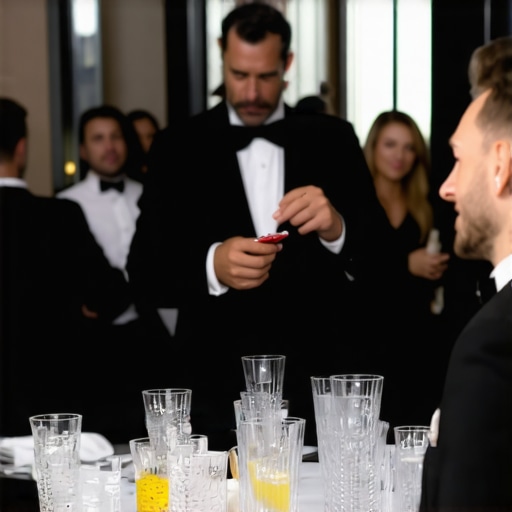
Many planners are leaning into data-heavy hyper-personalization services, thinking that knowing a guest’s favorite drink is the peak of sophistication. However, a study in the Journal of Interactive Marketing highlights the ‘personalization-privacy paradox’—if a guest feels tracked rather than welcomed, they psychologically withdraw. The key is to make the personalization feel like a happy accident or ‘real magic.’ For example, when a magician hire uses a piece of information they couldn’t possibly know to perform a trick, it feels like wonder, not surveillance. That is the nuance: true expertise lies in the delivery, not just the data collection.
Stop Buying Luxury When You Really Need Logistics
I’ve also noticed a dangerous trend in micro event planning where hosts try to do too much in a small space. They jam in an inflatable water slide rental and a live band into a residential backyard, creating a sensory overload that prevents anyone from actually talking. Have you ever fallen into this trap of over-programming? Let me know in the comments. To truly master the flow, you must understand ‘Behavioral Settings.’ Environmental psychologist Dr. Roger Barker famously argued that the physical setting often has more influence on human behavior than the individual’s personality. If you set up your room like a lecture hall, people will act like students. If you set it up with pockets of intimacy using strategic cocktail table placement, they will act like collaborators. Stop looking at your floor plan as a map of furniture and start looking at it as a map of human psychology.
The tools I use to stop a gala from feeling like a chore
I’ve spent a decade testing every shiny piece of software on the market, and here is the brutal truth: most event tech is just extra homework for your guests. If an app takes more than three taps to get someone to the bar or a networking prompt, it’s a failure. I personally rely on a combination of 3D spatial mapping and real-time flow monitoring. I use tools like AllSeated specifically to ensure my sightlines are perfect because I’ve learned that even the most expensive magician hire will fail if a centerpiece is two inches too high. I also swear by a very specific guest-journey map I created that tracks ‘friction points’ from the moment the valet takes the keys. This is the same guest list coordination move that kills arrival boredom fast by ensuring no one is ever standing in a lobby without a purpose or a drink. Technology should be a ghost—felt through the smoothness of the evening but never seen as a hurdle.
How do I keep this level of polish at every single gig?
The secret isn’t in the setup; it’s in the ‘Post-Mortem.’ Every Monday morning, my team reviews the ‘heat map’ of our weekend events. We look at where people bunched up and where they drifted. Maintenance of a luxury brand requires a relentless obsession with the micro-interaction. For instance, I’ve found that even a snow cone machine rental needs this specific interaction plan to keep it from becoming a messy bottleneck. We treat the staff at those stations as performers, not just servers. Dr. Alex ‘Sandy’ Pentland’s work at the MIT Media Lab on ‘Social Physics’ proves that ‘exploration’—how people interact with different groups—is the single best predictor of creative output. By reviewing how our physical rentals moved people between groups, we can refine the strategy for the next high-stakes corporate gig. It’s about iterative improvement, not just showing up with a truck full of gear.
Your next big move isn’t more gear
I predict that the future of luxury events isn’t ‘more stuff’; it’s ‘responsive environments.’ We are moving into an era where sensors will detect when a room is getting too loud or too quiet and trigger a specific interaction to balance it. I’ve already started implementing this by ensuring every heated tent rental needs live interaction to keep the energy from flatlining when the temperature drops. The physical environment must react to the human energy inside it. If you are struggling to scale your business while maintaining this level of quality, you need to stop focusing on the inventory and start focusing on the systems. Mastering how to secure better event rentals deals without sacrificing entertainment quality is a skill, but the real profit is in the orchestration. If you want to see how I translate this level of detail into my digital presence, you absolutely need to grab the no-fluff checklist for making your google profile irresistible to event planners. Try auditing your next event floor plan specifically for ‘social friction’ before you sign off on the furniture delivery; you’ll be amazed at how much your engagement ROI improves when you stop blocking the exits.
The Expensive Lessons I Learned the Hard Way
After a decade of overseeing everything from micro event planning to massive galas, I’ve realized that the equipment is only twenty percent of the battle. The most expensive luxury restroom trailers on the market won’t fix the mood if your guests feel like they are being herded like cattle. I’ve learned that intentionality beats inventory every single time. Here are the lightbulb moments that changed my approach:
- The Equipment Trap: A snow cone machine rental is just a gadget; a performer making those snow cones is an experience. Don’t buy gear without a plan for how people will interact with it.
- Privacy Matters: When using high-tech interactive event apps or hyper-personalization services, always prioritize the guest’s comfort. If it feels like surveillance, they’ll stop participating.
- Quality Control: Learn how to secure better event rentals deals without sacrificing entertainment quality so you can shift your budget toward the things that actually trigger dopamine—like mystery and surprise.
The Toolkit That Keeps My Sanity Intact
I don’t leave my event success to chance, and neither should you. My personal workflow relies on a few specific resources that help bridge the gap between a room full of furniture and a room full of life. First, I always reference the principles of ‘Social Physics’ by Dr. Alex Pentland to understand how information flows through a crowd. Second, I use 3D layout software to ensure that my pipe and drape rental isn’t accidentally creating dead zones. Finally, for those on the service side, I highly recommend the no-fluff checklist for making your google profile irresistible to event planners. It’s the same logic I use to vet my own vendors; if you don’t look professional online, I won’t trust you with my high-value clients.
[IMAGE_PLACEHOLDER]
Go Beyond the Guest List and Create Wonder
At the end of the day, your team or your clients won’t remember the color of the napkins. They will remember how they felt when they were challenged, surprised, and respected. We are moving toward a future where an interactive show and responsive environments are the baseline, not the exception. If you are struggling to get your services noticed by the right people, stop over-optimizing for robots and start optimizing for human connection. The fact that why service area pages often fail to generate local magic bookings is usually because the service feels cold and detached is a lesson every business owner should take to heart. It’s time to stop hosting ‘meetings’ and start creating shared experiences that resonate. Have you ever seen a high-end rental completely fail to engage the crowd? Let me know your stories in the comments!