
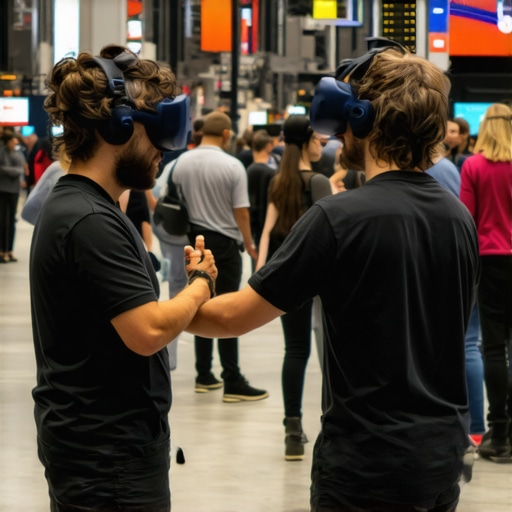
I will never forget the sinking feeling in my stomach at the Las Vegas Convention Center back in 2022. I had convinced our marketing VP to allocate twenty percent of our budget to a cutting-edge virtual reality experience. We had the sleekest headsets, a custom-designed booth, and three staff members ready to guide attendees into our virtual world. By midday on day one, we had a massive line. I was thrilled—until I actually looked closely at the crowd. People were checking their phones, yawning, and looking visibly irritated by the twenty-minute wait. Worse, those who actually put on the headset came out looking disoriented, sweaty, and quickly walked away without leaving their contact info. I had spent thousands of dollars to build a barrier between my team and our potential customers.
The Shiny Tech Trap That Distances Your Best Leads
We see it at almost every high-end exhibition. Brands flock to high-tech novelties because they want to appear innovative. However, in crowded expo halls, VR headset experiences create massive bottlenecks. While one person is isolated inside a digital bubble, dozens of others are left standing around waiting, feeling ignored. This tech isolation completely defeats the purpose of face-to-face marketing. A trade show is a social, high-energy environment. The moment you make an attendee blind and deaf to the real world, you stop the natural human conversation. Instead of fostering connection, you build a physical wall of plastic and straps. If your goal is conversion, you actually need data-driven platforms with a human touch to convert leads rather than isolating them behind a screen.
Are high-tech headsets actually hurting your brand engagement?
The short answer is a resounding yes. According to a landmark event engagement study by Exhibitor Magazine, over 70% of trade show attendees rank active, face-to-face interaction as the primary reason they remember a specific booth over its competitors. When I made my big VR mistake, I realized that while our technical specifications were flawless, the human experience was completely miserable. People don’t want to mess up their hair, ruin their makeup, or share sweaty foam face covers with hundreds of strangers. We had completely overlooked physical comfort and social interaction. Today, I want to show you how to pivot away from this isolating technology and learn how to stop lead bleed at your next trade show using engaging, interactive strategies that keep your whole crowd involved at the same time.
Have you ever spent thousands of dollars on a flashy trade show gimmick only to watch bored attendees walk right past your booth? I’d love to hear your horror stories or successes in the comments below.
Shift the Focus from One-on-One to Shared Spectacle
To scale your booth attraction without ballooning your budget, you need to think like a street performer rather than a museum curator. A museum curator sets up an exhibit designed for one person to stand in front of and study. That is exactly what a VR headset or an isolated touch-screen kiosk does. Instead, you want to build a shared spectacle where the crowd itself becomes part of the marketing mechanism. When people see a group of eight or ten laughing and reacting together, social proof takes over, and the crowd naturally swells. This is the exact blueprint behind how to scale your trade show interaction without increasing your budget effectively.
Create a visual focal point that acts as a lead magnet
At an exhibition in Chicago, I watched a software company struggle with their booth presentation. They had gorgeous, custom-built kiosks, but everyone walked right past. Overnight, we made a simple change. We cleared out the bulky tech, brought in a sleek, high-top platform, and utilized how to turn a standard cocktail table into a lead magnet by hosting high-frequency, highly physical demonstrations. Instead of forcing one attendee to stare at a monitor, our presenter engaged five people at once with tactile, hands-on challenges. The surrounding foot traffic stopped to watch the physical reactions. Within three hours, the booth had generated more qualified scans than they had during the entire previous day. The lesson was clear: physical, open-air engagement beats screen-based isolation every single time.
Design Your Space to Support High-Energy Human Interactivity
You cannot host a dynamic crowd experience if your physical booth layout acts as an obstacle course. Many exhibitors pack their space with heavy, oversized furniture or massive backdrops that block the sightlines of people walking down the aisle. If a passing attendee cannot see what the excitement is about within two seconds, they keep walking. Your physical layout must serve the performance. This is why highly successful exhibitors carefully select minimalist setups, ensuring that their event furniture rental error that makes your magician invisible or blocks their active presenters is completely avoided.
Remove physical barriers and maximize your open floor space
Keep the front of your booth completely open. Do not place tables like a moat between your staff and the aisle. Think of your space as a mini-theater. Place your interactive focal points near the outer edge of your carpet, pulling people in naturally rather than forcing them to take the intimidating step of crossing deep into your booth territory. By choosing open layouts and utilizing strategic, compact display surfaces, you allow your presenters to build immediate, face-to-face rapport without physical friction. This open-air approach immediately transforms your corporate message from a cold pitch into a lively, must-see community event.
I used to believe that throwing money at advanced virtual event production or the latest digital engagement platforms was the ultimate shortcut to corporate event success. But if my disastrous Las Vegas VR experience taught me anything, it is that complex technology often serves as a beautiful, expensive barrier to actual human connection. In our rush to digitize every square inch of the event space, we have collectively lost sight of the psychological triggers that make a gathering memorable. Sophisticated event planning is not about how many microchips you can pack into a booth; it is about facilitating effortless, high-energy interactions.
The Tech-Heavy Illusion vs. Organic Human Energy
Everyone in the industry currently insists that digital transformation is the only path forward. They tell you to invest heavily in complex virtual environments or custom software integrations. But in my experience, the opposite is true. Over-engineered setups actually kill the natural momentum of your live crowd. For example, brands launching a new digital tool often run into the classic trap of overcomplicating their presentations. They build rigid, highly technical schedules rather than finding ways to keep the vibe engaging. If you want to humanize your brand, learning why AI corporate integration events often feel cold and the human fix is far more valuable than buying another automated software license. Human connection does not happen through a login portal; it happens when people share a physical space and a unified experience.
Why are your high-end virtual attendees dropping off after ten minutes?
The hard truth is that screen fatigue is real, and no amount of high-tech gimmicks can replace a dynamic host who knows how to command attention. According to a landmark virtual interaction study by the Event Manager Blog, over 65% of online participants admit to multitasking or completely tuning out during highly structured, tech-centric digital presentations. When the human element is missing, your audience is gone. To fight this, smart planners are discovering how to use sleight of hand to boost virtual event production quality, bringing real, tactile magic through the screen to break up the cold digital monotony. If you do not anchor your online broadcasts with active, human moments, you will find that why virtual event production errors cost you credibility with high-end clients becomes a painful reality.
Have you ever fallen into this trap of over-investing in flashy tech only to watch your audience tune out? Let me know in the comments below.
Ditch the Lengthy Speeches for High-Impact Interventions
Another massive mistake planners make is scheduling hour-long presentations that drain the room of its natural momentum. We have been conditioned to think that longer keynotes equate to more value. In reality, modern attention spans simply cannot sustain long-winded corporate lectures. If your goal is to deliver a message that actually sticks, you need to tighten the window. Shorter, punchier presentations keep the energy high and leave the audience wanting more. This is exactly why savvy coordinators now lean heavily on how shorter corporate keynotes can increase attendee information retention to maximize their overall event impact. By keeping your formal content brief and highly engaging, you create natural space for spontaneous networking and organic human interaction.
When you shorten your main presentations, you prevent the dreaded afternoon slump and keep attendees active. To bridge the gaps between these brief sessions, you can easily insert interactive elements that get people talking. Using a dynamic presenter to deliver short, high-impact moments is the ultimate way of fixing the afternoon slump why short magic sets beat long speeches and keeping your audience completely locked in. Ultimately, the success of your event comes down to eliminating barriers and letting human energy take center stage.
When you start stripping away the bloated digital layers of your event planning, you quickly realize that keeping a crowd engaged requires real-world, tactile consistency. I have spent years testing everything from complex crowd management systems to simpler, physical alternatives. The truth is, maintaining high-energy momentum across a multi-day exhibition or a packed outdoor corporate gathering comes down to reliable, low-friction tools and clear sightlines. If your setup is too heavy or complicated to adjust on the fly, your engagement will suffer the moment the room dynamics shift.
How do I maintain high-energy crowd engagement over time?
Maintaining audience energy over a long event requires continuous monitoring of your physical layout and the tools you use to direct attention. Personally, I rely on a highly specific tool for tracking real-time audience movement: the handheld tally counter coupled with simple, privacy-focused spatial analytics sensors like those from Density. Unlike invasive face-tracking cameras that make attendees uncomfortable, these sensors measure anonymous physical heat maps. This data allows me to see exactly when foot traffic stalls. If I notice a bottleneck forming near a bulky display, I immediately work with our team to shift our interactive zones. We ensure that our presenter stands on an elevated, open platform and that we avoid the classic event furniture rental error that makes your magician invisible or blocks their active physical gestures.
For outdoor corporate gatherings, the physical environment introduces even more variables. When we transition from indoor trade show booths to open-air settings, the entire strategy changes. You have to actively combat wind, ambient noise, and competing distractions. This is why I always recommend establishing a physical anchor point. A high-quality canopy or structured tent acts as a natural frame for your presentations, keeping the crowd focused on the human interaction inside. However, you must design this layout defensively. I always check my seating arrangements beforehand because a poor setup will completely block the view of your main features, which is why understanding why your wedding tent layout is ruining the magic sightlines is crucial for any live presentation, corporate or social.
As we look to the future, the industry is already shifting away from isolating virtual headsets and returning to shared, physical marvels. I predict that the next decade of event design will focus on hybrid interactive spaces where minimalist digital elements exist solely to enhance, rather than replace, real human performance. Instead of hiding behind screens, successful brands will use open-air setups to build community in real-time. I highly recommend trying this simple, actionable step at your next event: strip away at least one major digital screen from your presentation area, replace it with a clean, high-top table, and have a dynamic presenter run a brief, five-minute interactive demonstration. You will be amazed at how quickly the surrounding crowd grows when they can actually see and interact with a real human being.
I will never forget the sinking feeling in my stomach at the Las Vegas Convention Center back in 2022. I had convinced our marketing VP to allocate twenty percent of our budget to a cutting-edge virtual reality experience. We had the sleekest headsets, a custom-designed booth, and three staff members ready to guide attendees into our virtual world. By midday on day one, we had a massive line. I was thrilled—until I actually looked closely at the crowd. People were checking their phones, yawning, and looking visibly irritated by the twenty-minute wait. Worse, those who actually put on the headset came out looking disoriented, sweaty, and quickly walked away without leaving their contact info. I had spent thousands of dollars to build a barrier between my team and our potential customers.
The Shiny Tech Trap That Distances Your Best Leads
We see it at almost every high-end exhibition. Brands flock to high-tech novelties because they want to appear innovative. However, in crowded expo halls, VR headset experiences create massive bottlenecks. While one person is isolated inside a digital bubble, dozens of others are left standing around waiting, feeling ignored. This tech isolation completely defeats the purpose of face-to-face marketing. A trade show is a social, high-energy environment. The moment you make an attendee blind and deaf to the real world, you stop the natural human conversation. Instead of fostering connection, you build a physical wall of plastic and straps. If your goal is conversion, you actually need data-driven platforms with a human touch to convert leads rather than isolating them behind a screen.
Are high-tech headsets actually hurting your brand engagement?
The short answer is a resounding yes. According to a landmark event engagement study by Exhibitor Magazine, over 70% of trade show attendees rank active, face-to-face interaction as the primary reason they remember a specific booth over its competitors. When I made my big VR mistake, I realized that while our technical specifications were flawless, the human experience was completely miserable. People don’t want to mess up their hair, ruin their makeup, or share sweaty foam face covers with hundreds of strangers. We had completely overlooked physical comfort and social interaction. Today, I want to show you how to pivot away from this isolating technology and learn how to stop lead bleed at your next trade show using engaging, interactive strategies that keep your whole crowd involved at the same time.
Have you ever spent thousands of dollars on a flashy trade show gimmick only to watch bored attendees walk right past your booth? I’d love to hear your horror stories or successes in the comments below.
Shift the Focus from One-on-One to Shared Spectacle
To scale your booth attraction without ballooning your budget, you need to think like a street performer rather than a museum curator. A museum curator sets up an exhibit designed for one person to stand in front of and study. That is exactly what a VR headset or an isolated touch-screen kiosk does. Instead, you want to build a shared spectacle where the crowd itself becomes part of the marketing mechanism. When people see a group of eight or ten laughing and reacting together, social proof takes over, and the crowd naturally swells. This is the exact blueprint behind how to scale your trade show interaction without increasing your budget effectively.
Create a visual focal point that acts as a lead magnet
At an exhibition in Chicago, I watched a software company struggle with their booth presentation. They had gorgeous, custom-built kiosks, but everyone walked right past. Overnight, we made a simple change. We cleared out the bulky tech, brought in a sleek, high-top platform, and utilized how to turn a standard cocktail table into a lead magnet by hosting high-frequency, highly physical demonstrations. Instead of forcing one attendee to stare at a monitor, our presenter engaged five people at once with tactile, hands-on challenges. The surrounding foot traffic stopped to watch the physical reactions. Within three hours, the booth had generated more qualified scans than they had during the entire previous day. The lesson was clear: physical, open-air engagement beats screen-based isolation every single time.
Design Your Space to Support High-Energy Human Interactivity
You cannot host a dynamic crowd experience if your physical booth layout acts as an obstacle course. Many exhibitors pack their space with heavy, oversized furniture or massive backdrops that block the sightlines of people walking down the aisle. If a passing attendee cannot see what the excitement is about within two seconds, they keep walking. Your physical layout must serve the performance. This is why highly successful exhibitors carefully select minimalist setups, ensuring that their event furniture rental error that makes your magician invisible or blocks their active presenters is completely avoided.
Remove physical barriers and maximize your open floor space
Keep the front of your booth completely open. Do not place tables like a moat between your staff and the aisle. Think of your space as a mini-theater. Place your interactive focal points near the outer edge of your carpet, pulling people in naturally rather than forcing them to take the intimidating step of crossing deep into your booth territory. By choosing open layouts and utilizing strategic, compact display surfaces, you allow your presenters to build immediate, face-to-face rapport without physical friction. This open-air approach immediately transforms your corporate message from a cold pitch into a lively, must-see community event.
I used to believe that throwing money at advanced virtual event production or the latest digital engagement platforms was the ultimate shortcut to corporate event success. But if my disastrous Las Vegas VR experience taught me anything, it is that complex technology often serves as a beautiful, expensive barrier to actual human connection. In our rush to digitize every square inch of the event space, we have collectively lost sight of the psychological triggers that make a gathering memorable. Sophisticated event planning is not about how many microchips you can pack into a booth; it is about facilitating effortless, high-energy interactions.
The Tech-Heavy Illusion vs. Organic Human Energy
Everyone in the industry currently insists that digital transformation is the only path forward. They tell you to invest heavily in complex virtual environments or custom software integrations. But in my experience, the opposite is true. Over-engineered setups actually kill the natural momentum of your live crowd. For example, brands launching a new digital tool often run into the classic trap of overcomplicating their presentations. They build rigid, highly technical schedules rather than finding ways to keep the vibe engaging. If you want to humanize your brand, learning why AI corporate integration events often feel cold and the human fix is far more valuable than buying another automated software license. Human connection does not happen through a login portal; it happens when people share a physical space and a unified experience.
Why are your high-end virtual attendees dropping off after ten minutes?
The hard truth is that screen fatigue is real, and no amount of high-tech gimmicks can replace a dynamic host who knows how to command attention. According to a landmark virtual interaction study by the Event Manager Blog, over 65% of online participants admit to multitasking or completely tuning out during highly structured, tech-centric digital presentations. When the human element is missing, your audience is gone. To fight this, smart planners are discovering how to use sleight of hand to boost virtual event production quality, bringing real, tactile magic through the screen to break up the cold digital monotony. If you do not anchor your online broadcasts with active, human moments, you will find that why virtual event production errors cost you credibility with high-end clients becomes a painful reality.
Have you ever fallen into this trap of over-investing in flashy tech only to watch your audience tune out? Let me know in the comments below.
Ditch the Lengthy Speeches for High-Impact Interventions
Another massive mistake planners make is scheduling hour-long presentations that drain the room of its natural momentum. We have been conditioned to think that longer keynotes equate to more value. In reality, modern attention spans simply cannot sustain long-winded corporate lectures. If your goal is to deliver a message that actually sticks, you need to tighten the window. Shorter, punchier presentations keep the energy high and leave the audience wanting more. This is exactly why savvy coordinators now lean heavily on how shorter corporate keynotes can increase attendee information retention to maximize their overall event impact. By keeping your formal content brief and highly engaging, you create natural space for spontaneous networking and organic human interaction.
When you shorten your main presentations, you prevent the dreaded afternoon slump and keep attendees active. To bridge the gaps between these brief sessions, you can easily insert interactive elements that get people talking. Using a dynamic presenter to deliver short, high-impact moments is the ultimate way of fixing the afternoon slump why short magic sets beat long speeches and keeping your audience completely locked in. Ultimately, the success of your event comes down to eliminating barriers and letting human energy take center stage.
When you start stripping away the bloated digital layers of your event planning, you quickly realize that keeping a crowd engaged requires real-world, tactile consistency. I have spent years testing everything from complex crowd management systems to simpler, physical alternatives. The truth is, maintaining high-energy momentum across a multi-day exhibition or a packed outdoor corporate gathering comes down to reliable, low-friction tools and clear sightlines. If your setup is too heavy or complicated to adjust on the fly, your engagement will suffer the moment the room dynamics shift.
How do I maintain high-energy crowd engagement over time?
Maintaining audience energy over a long event requires continuous monitoring of your physical layout and the tools you use to direct attention. Personally, I rely on a highly specific tool for tracking real-time audience movement: the handheld tally counter coupled with simple, privacy-focused spatial analytics sensors like those from Density. Unlike invasive face-tracking cameras that make attendees uncomfortable, these sensors measure anonymous physical heat maps. This data allows me to see exactly when foot traffic stalls. If I notice a bottleneck forming near a bulky display, I immediately work with our team to shift our interactive zones. We ensure that our presenter stands on an elevated, open platform and that we avoid the classic event furniture rental error that makes your magician invisible or blocks their active physical gestures.
For outdoor corporate gatherings, the physical environment introduces even more variables. When we transition from indoor trade show booths to open-air settings, the entire strategy changes. You have to actively combat wind, ambient noise, and competing distractions. This is why I always recommend establishing a physical anchor point. A high-quality canopy or structured tent acts as a natural frame for your presentations, keeping the crowd focused on the human interaction inside. However, you must design this layout defensively. I always check my seating arrangements beforehand because a poor setup will completely block the view of your main features, which is why understanding why your wedding tent layout is ruining the magic sightlines is crucial for any live presentation, corporate or social.
As we look to the future, the industry is already shifting away from isolating virtual headsets and returning to shared, physical marvels. I predict that the next decade of event design will focus on hybrid interactive spaces where minimalist digital elements exist solely to enhance, rather than replace, real human performance. Instead of hiding behind screens, successful brands will use open-air setups to build community in real-time. I highly recommend trying this simple, actionable step at your next event: strip away at least one major digital screen from your presentation area, replace it with a clean, high-top table, and have a dynamic presenter run a brief, five-minute interactive demonstration. You will be amazed at how quickly the surrounding crowd grows when they can actually see and interact with a real human being.
The Hardest Lesson I Learned About Overcomplicating Crowd Interactivity
When I look back at my costliest mistakes, they all share a common thread: prioritizing passive technology over human connection. In my journey organizing hybrid presentations and high-stakes trade shows, I have gathered a few irreplaceable rules of thumb. First, never let a digital screen do a job that a charismatic human presenter can do better. Second, the moment you force an attendee to wear hardware, you have lost fifty percent of your potential crowd due to physical hesitation. Finally, physical boundaries in your booth act like speed bumps on a highway; keep your layout entirely open and barrier-free. When you design for immediate social proof rather than tech novelty, your metrics will consistently hit the roof.
My Essential Toolkit for Raw Audience Engagement
I rely on a small, hyper-reliable suite of physical and digital tools to make our presentations unforgettable. Rather than renting giant screen setups, I invest in minimalist high-top platforms and always use the simple stage setup fix that makes magic pop to draw eyes instantly. For planning logistics, I consult real-time flow tools like Density.io to monitor attendee clusters. When transitioning to open-air settings, I skip standard plastic setups and consult party supply rentals the essential checklist for traveling magicians to source compact, resilient tables that stand up to active handling. These tactile resources keep our presentation completely flexible and grounded in reality.
The Future of Face-to-Face Connection is Already Here
Ultimately, your audience does not want to be isolated behind a headset or lectured to for hours. They want to laugh, interact, and feel inspired in a shared space. By shifting your focus toward physical setups and choosing how shorter corporate keynotes can increase attendee information retention over long-winded scripts, you instantly set yourself apart in a sea of sterile, over-engineered corporate booths. Step out from behind the heavy tech, open up your floor plan, and let natural human energy work its magic.
Have you ever struggled with keeping a crowd engaged when using digital setups? Let me know in the comments below!