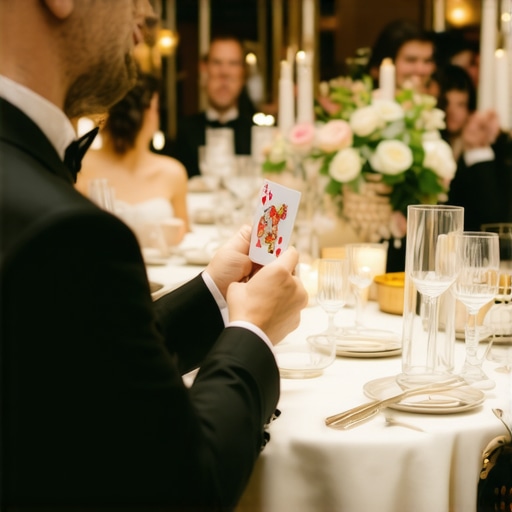
I was standing at the back of a gorgeously decorated ballroom last summer, watching the exact moment a wedding began to breathe its last breath of energy. The ceremony had been a tear-jerker, the vows were perfect, and the flowers smelled like a dream. But then, the ‘gap’ happened. You know the one. The bridal party was off taking photos, the kitchen was running twenty minutes behind on the salmon, and guests were stuck in that awkward limbo between their third glass of champagne and a growling stomach. I watched a group of cousins stare blankly at their phones while the music thudded aimlessly in the background. It hit me like a ton of bricks: we spend thousands on the venue and the dress, but we often leave the most vulnerable part of the day—the guest experience during transitions—to chance. That’s why I’m convinced that a table-hopping magician isn’t just an extra; it’s a vital insurance policy for your reception’s momentum.
The Hidden Energy Drain of Every Wedding Reception
I’ll be the first to admit that I made a massive mistake early in my event planning days. I thought that as long as the bar was open and the playlist was loud, people would be happy. I learned the hard way that ‘hangry’ guests are a tough crowd to win back once they’ve checked out mentally. When the catering staff is working hard behind the scenes, your guests are essentially in a holding pattern. This is precisely where the timeline management move that stops event flow from stalling comes into play. Instead of leaving people to count the bubbles in their drinks, a magician creates a localized pocket of high energy that ripples through the room. It’s about more than just a card trick; it’s about giving people a shared experience to talk about with the strangers sitting next to them. According to a survey by The Knot, guest entertainment is one of the top three things attendees remember most about a wedding, yet it often receives the least amount of strategic planning compared to the menu or the florals. Think of it like the move to fix boredom during luxury restroom trailer waits; you are identifying a friction point in the day and smoothing it over with genuine human connection.
Does Close-Up Magic Feel Too Much Like a Kids Birthday Party?
I get the skepticism. You’re worried that bringing in a magician might turn your sophisticated black-tie affair into an eight-year-old’s pizza party. I had that same fear until I saw a true professional work a room. We aren’t talking about pulling rabbits out of hats; we are talking about sophisticated sleight-of-hand that leaves CEOs and grandparents alike absolutely floored. It’s about how to coordinate your party photo booth with a magic act to ensure there is a constant flow of ‘wow’ moments throughout the venue. Have you ever been to a wedding where you felt like you were just waiting for the next thing to happen? It’s a common frustration, and I want to hear from you—have you ever experienced that dreaded ‘wedding lull’ where the energy just evaporated? Today, we’re going to look at how to strategically place a performer to bridge those gaps and keep the party alive.
Stop the momentum leak during your cocktail hour
The first step to executing this properly is identifying the ‘dead zones’ in your schedule. Most planners view the cocktail hour as a filler, but I want you to view it as the engine room of your party. To make it work, you need to understand how to integrate a magician into your wedding coordination timeline so they aren’t competing with the grand entrance or the first dance. I recommend having the performer start exactly fifteen minutes after the first guest enters the lounge area. This gives everyone enough time to grab their first drink and settle in, but not enough time for the conversation to stall. Think of the magician as a ‘social campfire’—people naturally huddle around the heat of the performance. If you have guests coming from different circles who don’t know each other, this is the most effective way to break the ice without those cringeworthy ‘get to know you’ games. I once saw a wedding where the bride’s high-school friends and the groom’s corporate colleagues were standing in literal separate corners until a magician performed a single card-to-wallet routine that brought them together in a shared shout of disbelief. That’s the power of intentional placement.
Why your furniture layout determines if a trick actually lands
Concrete execution means looking at your floor plan with a critical eye. You can’t just drop a performer into a crowded room and hope for the best. For instance, why round tables are better for interactive magic becomes obvious the moment a performer tries to work a long, narrow banquet table—it’s nearly impossible to involve everyone at once. You want to create ‘pockets’ of space. I’ve learned that how to use party table rentals to create better magic sightlines is the difference between a guest seeing the miracle and a guest just seeing the back of someone’s head. If you’re using high-top bistro tables, make sure they aren’t clustered too tightly. A magician needs a ‘radius of wonder’—about three feet of clearance—to move comfortably between groups. 
Keep the energy alive while the kitchen catches up
The most dangerous gap is the transition between the cocktail hour and the main meal. This is where the ‘hangry’ factor starts to creep in. I remember a corporate gala where the catering staff hit a massive snag with the main course. The room was starting to feel restless, and the hum of conversation was turning into a low-frequency grumble. We sent the magician to the tables that hadn’t been served yet. It was a strategic distraction. However, you have to be mindful of the environment; for example, keeping your hands clean for card tricks is a real concern if you’re serving finger foods, so timing the magic before the messy appetizers arrive is crucial. You also need to be wary of how party photo booth placement directly impacts magic engagement. If you put the magician right next to a loud, flashing photo booth, you’re creating sensory overload. Instead, place them on the opposite side of the room to balance the ‘traffic’ and ensure every corner of your venue feels alive. Whether it’s a high-stakes reception or a baby shower organization where you want to keep the mood light, the goal is to use the performer as a tool to smooth out the friction of the day’s logistics. Even small details like the wedding tent rental mistake that makes magic look cheap—usually poor flooring or bad lighting—can be fixed by simply choosing the right spot for the ‘miracles’ to happen.
I see it at every major trade show and corporate gala lately: the push for ‘data-driven’ engagement. Planners are obsessed with gathering metrics through event apps, but here is the contrarian truth that most won’t tell you—digital tools are often the greatest barrier to actual connection. While you are busy tracking click-through rates on a digital itinerary, your guests are missing the spontaneous moments of wonder right in front of them. In my experience, why interactive event apps often kill real networking opportunities boils down to the fact that they encourage people to look down at their screens rather than up at their peers. Real ‘experiential networking’ doesn’t happen through a LinkedIn integration on a tablet; it happens when two people gasping in unison at a borrowed ring appearing inside a sealed envelope. This is why why virtual event production needs more human interaction and less tech, even when the platform is top-tier.
Stop Relying on Apps to Start the Conversation
The ‘Oops’ factor often comes from a place of good intentions. I’ve seen organizers spend a fortune on sustainable event decor using natural materials for better illusions, only to ruin the organic vibe by forcing every guest to scan a QR code just to see the menu. If you want people to talk, you need to give them a reason to be present in the physical world. A study published in the Journal of Social and Personal Relationships suggests that even the mere presence of a smartphone on a table can significantly reduce the perceived quality of a face-to-face interaction. This ‘digital distraction’ is the enemy of the professional entertainer. If your guests are neck-deep in their notifications, even the most impressive sleight-of-hand will go unnoticed. Have you ever fallen into this trap of over-automating your event flow? Let me know in the comments.
#IMAGE_PLACE_HOLDER_C#
How Do You Balance Digital Convenience with Real-World Wonder?
The trick is to use technology as a silent partner, not the main attraction. For instance, knowing the tactic to blend magic into modern event design trends involves using tech for logistics (like check-ins) but keeping the actual interaction strictly human-to-human. One advanced mistake I often see involves the tactile nature of the event. If you are hosting a high-end gathering, you might be tempted to offer heavy appetizers, but you have to be wary of the nacho machine rental mess how to handle cards with messy fingers. A magician can’t perform miracles with greasy decks. It’s these small, logistical nuances—the intersection of your catering, your decor, and your entertainment—that define the guest experience. It is much easier to facilitate a shared experience when you integrate a close-up act into the actual flow of the room rather than treating it as a ‘side show’ that has to compete with a loud DJ or a distracting app notification. True expertise in event planning isn’t about how much data you collect; it’s about how many genuine, undocumented smiles you create during those unscripted gaps in the schedule.
Maintenance in this game isn’t just about cleaning your card decks; it’s about maintaining the ‘frame’ of the performance across the entire venue. I’ve found that even the most talented performer will struggle if the physical environment is working against them. For example, I always check the dimensions of my furniture before the guests arrive. Most planners don’t realize that the height secret for successful coin vanishes usually requires a bistro table that sits exactly at elbow height for the average adult. If the table is too low, I’m hunching and exposing the mechanics; if it’s too high, the guests can’t see the ‘work’ on the surface. It’s the same with illumination. I cannot tell you how many times I’ve seen a performer lose the room because they were standing in a dark corner near the bar. I now insist on a portable LED fill light for my kits, because the stage lighting secret that makes sleight-of-hand truly invisible is all about controlling the shadows, not just making things bright. If you are scaling up to multiple rooms or complex conference management, these technical standards become your brand’s insurance policy. This level of detail is exactly the tactic to blend magic into modern event design trends without it feeling like an afterthought or a cheap party trick.
How do I keep my event’s energy consistent over eight hours?
The secret to longevity is pacing and the ‘rotation’ method. I treat the venue like a garden that needs constant tending. You can’t just dump all your entertainment into the first hour and hope for the best. Instead, I coordinate with the sound system rental team to ensure we have ‘audio cues’ that signal transitions. When the music shifts from soft jazz to upbeat funk, that’s my cue to move from the quiet VIP lounge to the main bar area where the energy is spiking. For those managing high-stakes corporate gigs, you should look into how to integrate interactive event apps with live mystery workshops. This allows the magic to live on the guest’s phone as a clue or a prompt, rather than a distraction that pulls them away from the room. According to the EventMB 2024 State of the Event Industry Report, 68% of planners now prioritize ‘active participation’ over ‘passive viewing.’ By using the interactive event apps alternative that actually builds trust, you move from being a simple performer to a facilitator of shared wonder. 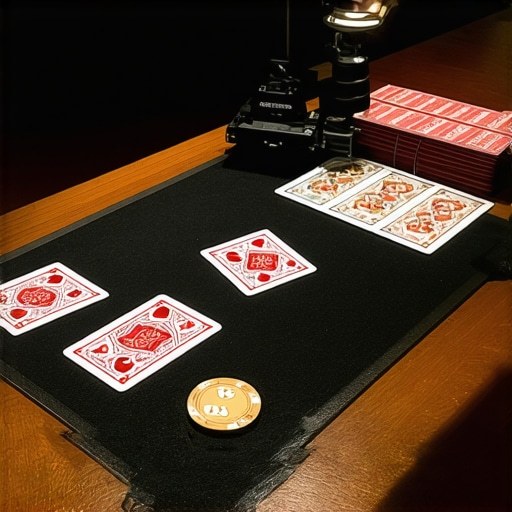 I predict that in the next five years, as AI-generated content floods our screens, guests will crave the tactile and the ‘uncanny’ more than ever before. We are going to see a massive shift back toward analog, high-skill performances that prove what the human hand is capable of in real-time. If you ignore this shift, your corporate event entertainment is leaving money on the table because you aren’t capturing the emotional ROI that leads to long-term client retention. My challenge for you: before your next event, take five minutes to walk your floor plan and look for the ‘blind spots’ where a performer might get lost in the shadows—fix those sightlines, and you’ll see your engagement double immediately.
The Hardest Lesson I Learned About Guest List Coordination and Flow
Early in my career, I focused entirely on the ‘big’ moments—the keynote, the first dance, the meal. I neglected the transition times where people actually connect. I learned that your guest list coordination strategy isn’t complete until you account for the emotional state of those guests during down-time. If you’re relying solely on data-driven event platforms to track your success, you’re missing the heart of experiential networking. Real connection happens in the gaps. If you leave guests in a vacuum, they go to their phones; if you give them a miracle, they go to each other.
- Stop Treating Magic as an Extra: It is a logistical tool for high-stakes conference management. It fills the gaps when the kitchen is slow or the check-in line is long.
- Watch the Physical Environment: I’ve seen event planning services fail simply because the furniture was too bulky or the layout was too cramped. Always walk the floor from a guest’s perspective.
- Energy is a Finite Resource: Don’t waste it on boring logistics. Use entertainment to ‘recharge’ the room before the next major segment.
My Essential Toolkit for Planning High-Impact Events
If you want to move beyond basic hosting, you need the right foundations. First, I always recommend looking at The Art of Gathering by Priya Parker—it completely changed how I approach the psychology of experiential networking. On a technical level, never skimp on a sound system rental; even a close-up performer needs a bed of ambient music to set the mood. I also keep a curated list of party supply rentals that support a professional magician, ensuring we have the right surfaces to make the impossible look effortless. Using sustainable event decor made of natural materials also helps create a warm, organic feel that tech-heavy platforms simply can’t replicate. If you’re struggling with visibility, a simple stage setup fix that makes magic pop can be as basic as shifting your ambient lighting to remove harsh shadows from the performer’s hands.
#IMAGE_PLACEHOLDER_E#
Start Creating Moments That Guests Actually Remember
At the end of the day, people won’t remember the color of the napkins or the specific font on the menu. They will remember how they felt when they saw something truly unexplainable with their own eyes. Whether you are managing a baby shower organization or a massive corporate gala, your goal is to facilitate human connection. By choosing the interactive event apps alternative that actually builds trust, you are investing in the social fabric of your event. Don’t let your event planning services become a series of check-boxes. If you aren’t prioritizing the guest’s emotional journey during those quiet transitions, your corporate event entertainment is leaving money on the table and missing a prime branding opportunity. Have you ever seen a wedding or corporate event stall out during the transitions? Let me know in the comments below!