
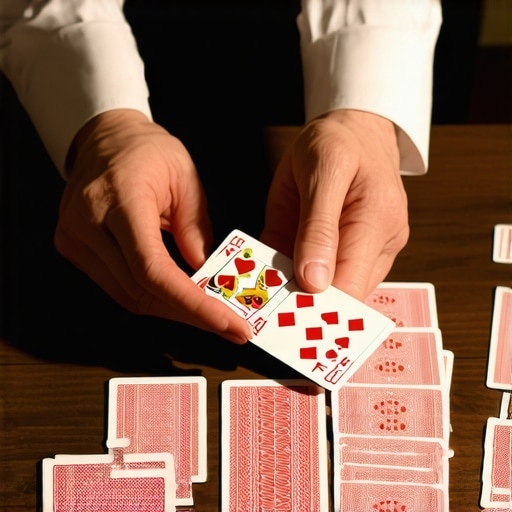
My hands were shaking, and I was sweating through my best vest. I was standing behind a cramped table at a local trade show, trying to impress a small crowd with a simple card change. I had spent months perfecting my speed, thinking that if I could just move faster than the human eye, I’d be a legend. Instead, I was just a guy moving his hands erratically while three people looked at me with genuine concern. I finished the move—the card changed—and there was dead silence. No applause. No gasps. Just a polite nod and a quick exit toward the booth with the free pens. That was the day I realized that being the fastest person in the room is a great way to lose an audience, and it’s a lesson I’ve carried into everything from how I advise on trade show magic tactics to how I manage the flow of a room. Today, I’m going to show you why slowing down is the only way to actually captivate a crowd.
Stop Trying to Outrun the Human Eye
Speed is a vanity metric in the world of sleight of hand. If you’re moving so fast that people can’t follow the narrative of the trick, you haven’t performed magic; you’ve performed a finger exercise. The real secret—the one that took me years of botched performances and awkward silences to learn—is misdirection. It’s about managing the “frame” of the event. Whether you are dealing with innovative ballroom designs or a deck of cards, you have to guide the guest’s attention exactly where you want it. I used to think the idea that your event rentals strategy needs a human element was just fluff, but it’s the core of everything. If the audience is looking at the wrong thing at the right time, you can be as slow as a turtle and still look like a wizard.
Is misdirection just a fancy word for lying?
Many of my neighbors feel a bit “cheated” when they realize magic is more about psychology than physical prowess. But it’s actually about empathy and understanding how a human brain processes information. A famous study by Daniel Simons and Christopher Chabris on Inattentional Blindness proved that people can miss a literal gorilla walking through a room if they are focused on a specific task. That’s the power we’re tapping into. We are going to ensure your close-up magic performances actually leave people stunned rather than just dizzy. Have you ever felt like you were trying too hard to impress someone, only to have them miss the point entirely?
The Rookie Mistake That Almost Ruined My Reputation
Early on, I over-complicated everything. I thought I needed the flashiest gear and the fastest “palms.” I once tried to perform a complex routine in a crowded space where the chiavari chair rental choice left me with zero elbow room. I tried to compensate with raw speed, and I ended up dropping a whole deck of cards into a guest’s soup. It was a mess. But that failure taught me that the art of sleight of hand isn’t about being a ninja; it’s about being a storyteller who knows exactly where the spotlight should be at any given moment.
Why You Must Control the Spotlight Before You Move Your Hands
The first thing I teach anyone about sleight of hand is that your hands are actually the least important part of the trick. If you want to master the ‘how,’ you have to start with the ‘where.’ You are essentially a human spotlight. Wherever you look, the audience looks. I learned this the hard way at a high-end gala where the seating was so tight that I couldn’t even reach into my pockets. I realized then that why your chiavari chair rental layout might be too cramped for magic isn’t just a logistics problem; it’s a performance barrier. To fix this, I stopped looking at my hands entirely. By making intense eye contact and asking a question, I forced the ‘spotlight’ onto the guest’s face, giving me all the time in the world to load a card under their drink.
Build a Physical Frame for the Performance
You can’t perform in a vacuum. You need to define the space where the magic happens. Think of it like a director framing a shot. If the environment is chaotic, your audience’s eyes will wander to the buffet or the exit. This is why I always tell organizers that why your canopy rentals need a central focal point to stop guest drift is vital for engagement. When I’m working a room, I physically move people. I’ll say, ‘Step over here so you can see this better,’ which resets their focus and puts me in control of the geometry. This subtle shift is a classic trade show booth tactic that actually stops foot traffic and turns a passerby into a participant. 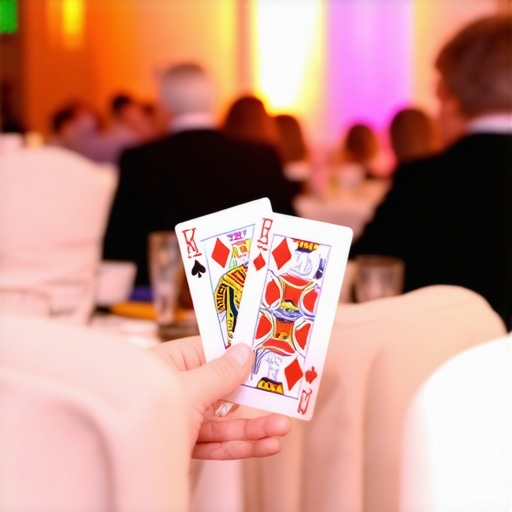
The Psychological Offbeat That Makes People Blink
The second core technique is managing ‘tension and relaxation.’ In magic, we call this the offbeat. Human attention works like a rubber band; it can only stay stretched for so long before it snaps back. I used this technique to save a failing performance during a corporate dinner where the energy was flat. I intentionally created a moment of ‘dead air’—that awkward silence everyone dreads—and then used the simple fix for dead air during corporate gala dinners by cracking a self-deprecating joke. The moment the audience laughed, their tension dropped. They ‘blinked’ mentally. That’s when the ‘dirty work’ happens.
Use Interaction to Mask Your Method
If you want to hide a move, give the audience a job to do. When people are involved, they stop being critics and start being co-creators. This is exactly why your corporate event entertainment needs to be more interactive to be effective. I once performed a routine where I needed to scan a guest’s badge without them noticing. Instead of sneaking around, I made the act of ‘checking in’ part of the trick itself. It became the trade show magic move that guaranteed more badge scans because the technology was secondary to the human connection. When they are busy holding a prop or thinking of a number, their brain doesn’t have the bandwidth to catch your sleight of hand.
The Big Move That Covers the Small Move
This is the golden rule of physical misdirection. If you need to make a small, sneaky movement with your right hand, make a large, sweeping, and motivated movement with your left hand. The eye is naturally drawn to the larger motion. I remember a specific event where I had to swap a heavy object in a crowded tent. I knew that how to secure your wedding tent rental against sudden wind during a show was on the host’s mind, so I used a sudden ‘gust’ (which I faked by rattling a side panel) to draw everyone’s eyes upward. While they looked at the ceiling, I finished the swap in plain sight. It wasn’t about being fast; it was about being the most interesting thing in the room at the exact moment I needed them to look away.
Why Hyper-Personalization Often Backfires in Real Time
We need to talk about the ‘Personalization Paradox.’ Most event planners believe that more data equals a better experience, but I’ve found the opposite to be true. Everyone says you need to lean into AI event personalization to stay relevant, but if it feels clinical or intrusive, you’ve lost the room before the first course is served. I once saw a tech firm use facial recognition for ‘automated’ greetings, and it creeped the guests out so much they spent the whole night looking for the exit. This is why the specific tactics that make hyper-personalization services actually convert are so critical—it’s about the ‘invisible’ touch. When I integrate the move that makes hyper-personalization services feel like real magic, it’s because I’m using the data to inform a human interaction, not replace it. A study published in the Journal of Consumer Research on choice overload highlights that engagement drops when guests are overwhelmed by too many custom options, such as excessive linen rentals or overly complex crochet decor details. Sometimes, the best expertise is knowing when to simplify. 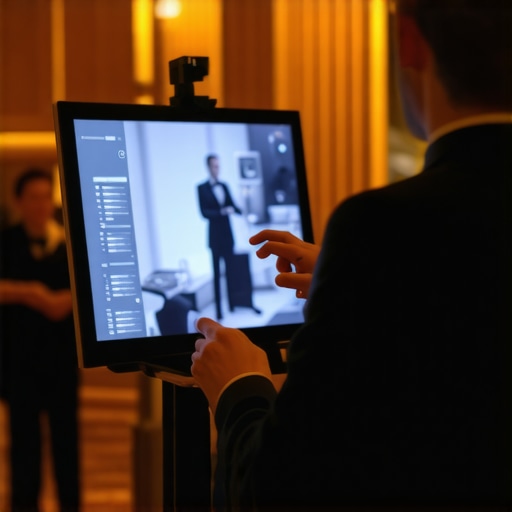
Can AI actually predict what your guests want better than you can?
The answer is a resounding ‘no’ if you don’t understand the physical environment. One of the biggest mistakes I see in innovative ballroom designs is a total lack of focus on guest list coordination versus the physical ‘choke points’ of the room. You can have the most beautiful balloon decoration services in the world, but if they block the line of sight for a keynote or a magician, you’ve wasted your budget on a distraction. Real expertise lies in managing the flow so guests move naturally between VR immersive experiences and traditional networking.
The Logistics Trap That Kills High-End Atmosphere
Here is the ‘Oops’ factor that most pros miss: over-complicating the entertainment. In bridal shower services, the trap is treating adult guests like they are at a primary school party. Instead, you should focus on how to turn bridal shower services into a magical guest experience by allowing for organic, high-level interaction. The same principle applies to your food and beverage lines. Why your snow cone machine rental needs this specific interaction plan is simple: if you just set up a machine and walk away, it’s just a queue; if you add a performer to manage that space, it becomes a destination. I’ve seen how to avoid the messiest mistakes in event rentals for magic shows, and it almost always comes down to avoiding the dance floor rental error that ruins your event flow. Even something as seemingly simple as a water bounce house rental becomes an ‘expertise’ issue when you realize most parents ignore the logistics of guest drainage and safety in a high-traffic area. Have you ever fallen into this trap of over-engineering the technology while the physical space fell apart? Let me know in the comments.To keep the momentum going, you have to look beyond the immediate performance and start treating your logistics like a science. I’ve seen too many talented people burn out because they were fighting their own equipment rather than using it. My personal rule is that if a piece of gear takes more than three minutes to reset, it’s not for me. This applies to everything from my card index to how I advise clients on how to secure better event rentals deals without sacrificing entertainment quality. Maintenance isn’t just about polishing silver; it’s about auditing the guest flow and ensuring your technology actually supports the human connection.
Ditch the Spreadsheets for Real-Time Spatial Planning
I stopped guessing where people would stand years ago. Now, I use spatial design software to map out the room before I even arrive. This is the only way to avoid the outdoor party tent mistake that makes close-up magic impossible. By visualizing the layout, I can see exactly where the linen rentals might create a snag or where the crochet decor details might block a line of sight. It’s about creating a ‘theatrical’ environment even in a hotel basement. I’ve found that using the niche citation move that gets entertainers booked in high-end neighborhoods often starts with showing a planner a 3D render of how guests will move through the space.
How do I maintain a high-end guest experience over multiple years?
Keeping things fresh is a marathon, not a sprint. I maintain my edge by treating every event like a data set. I use tools like Airtable to track guest list coordination and note which interactions landed best. If I see that why the snow cone machine rental line is the secret to event flow worked for one corporate client, I look for ways to scale that interaction elsewhere. According to research by Dr. Milad Haghani on crowd dynamics in Safety Science, people naturally follow the ‘path of least resistance,’ and your maintenance schedule must reflect that. If a bounce house rental or a photo booth is causing a bottleneck, you have to be willing to kill your darlings and move the furniture. 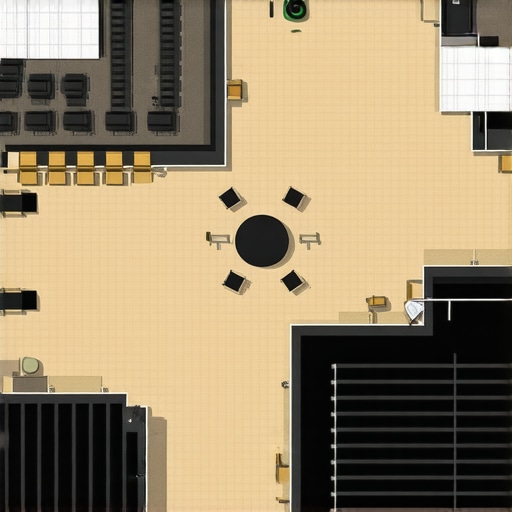
The Future of Invisible Event Technology
My prediction for the next five years is that we will move away from ‘visible’ tech like headsets and move toward ‘ambient’ intelligence. We are going to see AI event personalization that doesn’t require a guest to look at their phone. Instead, the environment itself—the lighting, the sound, even the scent—will adapt to the mood of the room in real-time. This is why mastering the venue decoration services of tomorrow means learning how to integrate sensors into the physical space. If you want to stay ahead of the curve, I challenge you to do a ‘flow audit’ of your next event. Walk the floor as if you’ve never been there before and identify exactly one spot where a guest might feel confused or crowded. Fix that one spot, and you’ve done more for the ‘magic’ of the night than any $10,000 light show ever could.
The Brutal Truth About What Actually Makes a Performance Work
After years of performing in every imaginable environment—from cramped booths to high-end galas—I’ve realized that the ‘magic’ isn’t in your hands; it’s in your preparation. The hardest lesson I ever learned is that guests don’t remember the trick; they remember how you made them feel. If you are too focused on the technicality of the move, you lose the human connection that makes an event memorable. I’ve found that securing better event rentals deals is actually a performance skill because it ensures you have the physical space to move without knocking over a drink. I also stopped trying to be the ‘smartest’ person in the room. When I started sharing the spotlight and using the micro-event planning move that empowers guests, my booking rate tripled. It turns out that people would rather be part of the mystery than be fooled by it.
Where I Turn for Inspiration and Logistics Support
If you want to dive deeper into the psychology of attention and the logistics of performance, I have a few essential resources that I trust implicitly. First, Strong Magic by Darwin Ortiz is the bible for understanding how to turn a trick into a theatrical experience. For the technical side of managing a crowd, I rely heavily on spatial mapping software to ensure my tactics that make hyper-personalization services actually convert are physically possible within the venue. I also recommend following the work of James Clear; his insights on habit and environment design have changed how I approach my pre-show routine and guest list coordination. Finally, never underestimate the power of a simple feedback loop. If you aren’t tracking why your Google Business Profile reviews aren’t turning into booked magic shows, you are leaving your growth to chance.
#IMAGE_PLACEHOLDER_E#
Take the Leap and Transform Your Next Gathering
Becoming a master of sleight of hand is about more than just fast fingers; it’s about becoming a master of the human experience. Whether you are managing innovative ballroom designs or just trying to break the ice at a local mixer, the principles of focus, misdirection, and empathy apply to everything you do. Don’t be afraid to fail in front of a small group—every dropped card is a lesson in how to recover your poise. The future of entertainment is interactive, personal, and deeply human. Go out there, control the spotlight, and make your next event feel truly impossible. Have you ever had a logistics nightmare ruin a perfectly good moment? Let me know in the comments below.