
I’ll never forget the silence that echoed through the ballroom at my first major gala. It was a gala dinner I’d spent months organizing, and while the DJ was spinning top-tier tracks, the room felt like a library. People were glued to their seats, picking at their salad, and checking their watches. I had the party table rentals perfectly arranged and the lighting was moody, but the ‘vibe’ was non-existent. That was the night I realized a loud speaker isn’t a substitute for real human connection. I felt like I had failed my client because I focused on the volume of the music instead of the pulse of the guests. Today, I’m going to show you exactly how to bridge that gap and why interactive magic is the secret weapon for energy that a DJ simply cannot replicate.
DJs Play Tracks but Magicians Create Moments
I once made the massive mistake of thinking that if I just upped the volume, the party would finally start. Spoiler alert: it didn’t work. It just made people shout over their appetizers and reach for their coats earlier. When you look at corporate event management, we often focus on the background noise rather than the foreground engagement. A DJ is a broadcast system; they push energy at people. Magic, however, is a two-way exchange. According to research published in Social Psychology Quarterly, shared extraordinary experiences foster significantly faster social bonding than passive observation, which is exactly why a card trick at a cocktail table does more for your ROI than a bass drop ever could. We are going to dive into how to stop the ‘energy bleed’ that happens during transitions and how to keep your guests talking long after the last plate is cleared.
Is a magician actually worth the investment?
You might be thinking your guests are too ‘professional’ or ‘serious’ for magic. I get it. I was the biggest skeptic in the room until I saw a CEO’s jaw hit the floor during a wedding catering wait. Modern interactive magic isn’t about pulling rabbits out of hats; it’s about sophisticated psychological play that breaks down barriers faster than any icebreaker. Have you ever felt that awkward ‘dead zone’ at your events where everyone just stares at their phones? Tell me, have you struggled to get your attendees to actually talk to each other instead of just standing in circles? We’re going to fix that right now.
Stop Treating Entertainment Like a Background App
When you plan a gala or a corporate retreat, it is easy to treat the entertainment as a checkbox item, much like the floral arrangements. But a magician is a living, breathing part of your event architecture. If you want the energy to stay high, you have to start with how you arrange your party table rentals to create better sightlines. I once worked a high-end fundraiser where the centerpieces were so tall that guests couldn’t see the person across from them, let alone a deck of cards. It effectively killed the conversation before the first course even arrived. Think of your event like a movie; the main stage events are the action scenes, but the transitions are what hold the plot together. If the transition is clunky, the audience loses interest. This is particularly true during a stalling event flow.
Clear the Clutter from Your Tabletop
To make magic work, you need physical space. A common decoration mistake that makes close-up magic impossible is over-styling the surfaces. Think of a cocktail table as a stage. If it is covered in candles, brochures, and discarded glassware, there is no room for the miracle to happen. I recommend keeping at least 40% of the table surface clear. This isn’t just about the tricks; it’s about giving your guests a place to lean in and connect.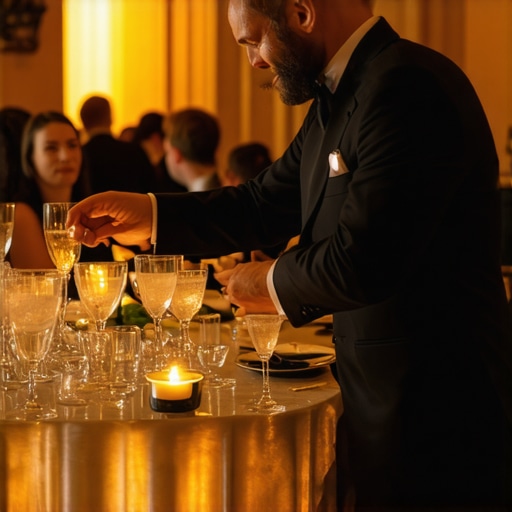
Strategic Placement Beats High Volume
One of the biggest mistakes I see in corporate event management is placing a magician too close to the noise. You should stop putting the magician next to the party photo booth or the main speakers. Magic requires focus and verbal patter. If your guests are shouting to hear the punchline, the impact is lost. I remember a wedding coordination gig where the DJ’s subwoofers were vibrating the very table I was trying to perform a coin vanish on. Every time I reached for a guest’s hand, the bass drop made them flinch. It wasn’t edgy—it was frustrating for everyone involved. When you use photo booth placement wisely, you create a secondary hub of activity that supports the magic act rather than distracting from it.
Use the Buffer Zones to Your Advantage
Every event has dead zones—those 15 to 20-minute gaps where the kitchen is plating the main course or the keynote speaker is running late. This is where table-hopping magic becomes a lifesaver. Instead of letting the energy dip, you inject a burst of adrenaline. I always look for the natural bottlenecks—the spots where people naturally cluster. That is where you deploy the engagement.
Rescue the Restroom and Bar Lines
This sounds crazy until you see it in action. At a large outdoor corporate summit last summer, the wait for the bar was nearly twelve minutes. People were starting to scroll on their phones—the ultimate sign of event death. I spent that hour performing specifically for those in the queue. By the time they got their drinks, they weren’t annoyed about the wait; they were laughing about the card that ended up in their own pocket. This is why I often suggest that luxury restroom trailer waits need close-up magic. It transforms a logistical necessity into an unexpected highlight.
Sync the Schedule to Your Guests Pulse
To get the most ROI from your entertainer, you must integrate them into your coordination timeline properly. Don’t have a magician performing while a major speech is happening, but do have them active during the transition from the cocktail hour to the seating phase. This keeps the buzz alive as people move between rooms, ensuring the energy doesn’t reset to zero every time the environment changes.Most event planners operate under the ‘more is more’ philosophy. They assume a larger trade show booth or more elaborate centerpieces will naturally lead to higher guest satisfaction. In reality, this often creates physical and psychological barriers. A study by the Journal of Consumer Research indicates that over-stimulating environments can lead to ‘choice paralysis’ and social withdrawal. When you over-complicate your layout, you’re actually encouraging your guests to check out mentally. I’ve seen trade show floors where the most expensive booths were the ones being walked past because they lacked a human focal point. This is why the trade show hook that stops walkers in their tracks isn’t a digital screen—it’s a person performing an impossible feat of sleight of hand. Have you ever fallen into the trap of over-designing a space only to have it feel empty? Let me know in the comments.
Bigger Booths Often Sabotage Your Trade Show Results
It sounds counterintuitive, but why your trade show ROI is lower than you think often boils down to the ‘fortress effect.’ When you build a massive, walled-off booth, you create an intimidation factor. People don’t want to be ‘trapped’ in a sales pitch. However, if you use a minimalist setup with high-engagement entertainment, you pull people in naturally. I’ve found that the trade show strategy for doubling leads without doubling your staff involves using magic as a filter; the magician stops the crowd, builds the energy, and then seamlessly hands off a warm lead to your sales team. This turns your booth into a destination rather than a hurdle.
Stop Picking Furniture Just Because It Looks Pretty
One of the most common ‘oops’ factors I encounter is the selection of rentals based purely on aesthetics. Planners often choose deep, low-slung lounge chairs for networking areas, thinking they look chic. In practice, the problem with standard event furniture rentals like these is that they make it nearly impossible for a performer to engage the group. If your guests are sunk into a sofa, they can’t lean in to see a coin vanish. Similarly, the height secret for successful coin vanishes is choosing cocktail tables that sit at elbow height. This allows the magician to work at the guests’ eye level, creating a much more intimate and impactful experience. Always test your furniture for ‘interaction flow’ before you sign that rental agreement.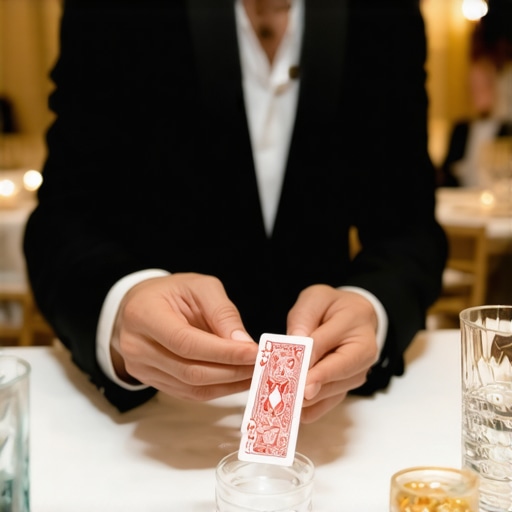
Can digital apps ever truly replace a handshake?
Many corporate event management teams are pivoting heavily toward event apps for networking. While technology has its place, why interactive event apps often kill real networking opportunities is simple: they keep people looking down at their screens instead of up at each other. Real human connection is visceral. When a magician makes a signed card appear inside a guest’s own wallet, that creates a shared memory that no push notification can match. You should treat tech as the skeleton of your event, but use live, interactive entertainment as the heartbeat that keeps the blood pumping through the room. If you’re planning a high-stakes meeting, consider humanizing technical meetings through strategic sleight of hand to ensure your message actually sticks.
The Invisible Gear That Saves My Reputation
I’ve seen too many planners spend $50k on a gala only to have the entire atmosphere ruined by a flickering $10 par light. When it comes to equipment, I am a zealot about my ‘Go-Bag.’ I never rely on the venue’s basic setup. For instance, the stage lighting secret that makes sleight of hand truly invisible isn’t about brightness; it’s about the specific angle and color temperature of the light. I personally use a portable, high-CRI LED pin spot because it allows me to control the focal point on a cocktail table without washing out the entire room. If you are handling party table rentals: how surface texture affects your card flourishes, you know that a sticky or overly slick surface can kill a routine instantly. I always carry a custom-cut neoprene mat that matches the event’s aesthetic. This is why I tell my clients that why your linen rentals and magic must align for visual impact is a technical necessity—if the friction isn’t right, the coin won’t slide, and the illusion dies.
How do I keep the ‘wow’ factor alive during long-term tours or multi-day trade shows?
It’s all about the ‘reset.’ After a six-hour shift on a trade show floor, your hands get tired and your props get grimy. I use a specific brand of specialized hand conditioner—not lotion—to maintain the perfect level of tackiness. Research in the Journal of Vision suggests that ‘inattentional blindness’ is most effective when the movement is fluid and consistent. If my hands are dry, the fluidity breaks, and the ‘tell’ becomes visible. To maintain this over a three-day expo, I swap my deck of cards every two hours. This ensures the ‘Air-Cushion Finish’ remains consistent, which is vital for the hidden sleight of hand tactics used at high-end trade shows. If you ignore these tiny maintenance details, you’ll find that why your trade show booth is being ignored by potential leads is often because the energy feels ‘stale’ or the execution looks amateurish compared to the high-tech surroundings.#IMAGE_PLACE_HOLDER_D#
Future-Proofing Your Event Energy with Hybrid Tech
Looking ahead, the next frontier isn’t just live or just digital—it’s the ‘Phygital’ space. I’m already seeing a massive shift in how we integrate physical sleight of hand into virtual platforms. When you learn how to use sleight of hand to boost virtual event production quality, you’re essentially learning how to direct the viewer’s eye through a camera lens with surgical precision. In the next five years, expect to see magicians using AR-enhanced cards that display corporate data as they are revealed in mid-air. This is how we will keep the ‘heartbeat’ of the event alive, regardless of whether the guest is in the room or on a Zoom call. Try this today: Go to your next venue and check the ‘Interaction Shadows.’ If the light is directly behind the guest, they can’t see the magic. Move the table or the light, and watch the engagement double instantly.
The Hard Truth About Energy Flow I Learned After 100 Failed Galas
One of the biggest realizations I had early in my career was that the physical environment acts as your silent co-performer. If your party supply rentals are too bulky or your venue decoration services ignore the performer’s needs, you aren’t just making the magic harder—you’re actively killing the atmosphere. Through trial and error, I discovered that tactile feedback is king. I used to think any surface would suffice, but I eventually learned that choosing the best surface for coin magic actually dictates the performer’s level of confidence, which translates directly into the audience’s sense of wonder. I also learned that noise acts as a wall, not a vibe. When guests are forced to shout, they stop connecting. A magician can bridge that gap by using silent, visual hooks, but only if they are positioned strategically away from the speakers. Lastly, I realized that the ‘buffer’ in your schedule is actually your best friend. Instead of fearing downtime, using the magic buffer that fixes event timeline gaps instantly turns a standard catering delay into the most talked-about part of the evening.
The Gear and Knowledge I Never Leave Home Without
To truly master corporate event management, you must look beyond the logistics spreadsheet and focus on the sensory experience. I rely on a few specific items to keep the energy levels peak: First, a high-quality portable spotlight. Knowing the right stage lighting secret can turn a dull ballroom corner into an intimate professional theater. Second, I always consult a strict checklist for my setup to ensure I never skimp on the visual frame. A poorly chosen backdrop can make even the most sophisticated illusion look cheap or amateurish. Finally, I maintain what I call a ‘tactile toolkit’ consisting of specialized hand conditioners and clean surfaces. You would be surprised how a simple nacho machine rental mess can ruin a deck of cards and halt the entertainment if you aren’t prepared with the right cleaning protocols.
Start Building Human Connections Instead of Just Checklists
At the end of the day, your attendees won’t remember the exact color of the napkins, but they will remember how it felt when the impossible happened right in front of their eyes. Whether you are currently knee-deep in wedding coordination or trying to find a way to stop lead bleed at your next trade show, remember that engagement is the heartbeat of any gathering. Don’t be afraid to move away from traditional, passive scripts and try something that challenges and delights your guests. Interactive magic isn’t just a spectacle; it is a strategic tool for humanizing technical meetings and creating lasting bonds between strangers. Have you ever noticed a specific ‘dead zone’ in your event timeline that you struggled to fill? Let me know in the comments below!