

I stood at the back of the ballroom, watching sixty-five of the brightest engineers I had ever met stare silently at their salads. I had spent weeks planning this retreat, thinking that high-end catering and a beautiful view would magically dissolve the silos between departments. It was a disaster. The room felt like a library during finals week, not a collaborative workshop. I realized then that you can’t just throw people into a room and expect ‘synergy’ to happen on its own. I made the classic mistake of thinking that bigger was better, once even wasting a huge chunk of a client’s budget on flashy party supply rentals that just distracted people instead of connecting them. That day, I learned that the secret to engagement isn’t about the fluff; it is about creating a shared moment of wonder that forces the brain out of its ‘work mode.’ Today, I am going to show you how to use a few specific psychological principles of deception to turn even your most introverted staff into active participants.
Standard ice breakers are actively killing your office morale
Most corporate events feel like a chore because they rely on predictable, high-pressure social scripts. When you ask a quiet employee to ‘share a fun fact,’ you aren’t building a team; you are inducing a panic attack. I used to be the guy who thought a mechanical bull rental would be the ultimate ice breaker, only to watch my introverted team members hide in the bathroom to avoid the spotlight. Real connection happens when the focus is shifted away from the individual and onto a shared mystery. This is where the magic happens—literally. By humanizing technical meetings through strategic sleight of hand, you provide a neutral ground for conversation. According to research published by Gallup, only 33% of U.S. employees are truly engaged at work, and a primary reason is the lack of genuine social bonds. Have you ever sat through a team-building event where you felt more lonely than when you were at your desk?
Is magic actually professional enough for the boardroom?
I get the skepticism; the word ‘magic’ usually conjures up images of sparkly vests and rabbits. But in a professional setting, it is about the ‘impossible object’—a shared puzzle that requires everyone to lower their guard to solve. Instead of the usual interactive event apps that fail to build real connection, using a physical, tactile mystery gets people talking because they physically cannot help themselves. I’ve seen CEOs and interns huddled over a single deck of cards, completely forgetting their rank. When you use magic to break the ice, you aren’t just entertaining; you are creating a level playing field. Before we get into the nuts and bolts of how to implement this, we need to address why your current layout might be working against you.
Fix the room before you fix the culture
To get people talking, you first have to stop fighting the room’s physical architecture. I once booked a beautiful glass-walled boardroom in Chicago for a high-stakes strategy session, but I made the rookie mistake of letting the facility manager set up theater-style seating. Because the chairs were in rigid rows, the engineers in the back couldn’t see the card-based demonstration I was using to explain algorithmic complexity. Total disaster. People didn’t feel like a team; they felt like a captive audience. This is exactly why you need to arrange event furniture rentals for an immersive mystery workshop from the very beginning. If the layout creates physical distance, it creates social distance. I had to stop the meeting, have everyone help move the chairs into small clusters, and suddenly the energy shifted. You can’t force ‘engagement’ in a room designed for passive listening. The venue decoration services mistake that makes close-up magic impossible is often just a matter of poor sightlines. 
Round tables are your secret weapon for sightlines
Most planners think about aesthetics first, but for engagement, you need to think about focal points. I’ve learned that round tables are better for interactive magic because they allow for 360-degree participation. When guests are seated at long rectangles, the ends of the table are effectively excluded from the conversation. By utilizing a venue decoration services hack for better stage sightlines, you ensure that every person in the room has a front-row seat to the ‘impossible.’ This physical proximity is the catalyst that turns a group of strangers into a collaborative unit. You want people leaning in, not leaning back.
Master the art of the tactical timeline gap
The biggest killer of event momentum isn’t a bad speech; it’s the transition period between sessions. Whether it’s waiting for the buffet to open or the next speaker to set up, these gaps are where you lose people to their phones. I now use what I call a magic buffer that fixes event timeline gaps instantly. During a recent retreat for a fintech firm, the catering team ran twenty minutes late. Normally, that’s when the ‘meeting fatigue’ sets in. Instead of letting them stew, I performed a series of micro-mirrors that required them to work together to spot the move. This timeline management move that stops event flow from stalling keeps the collective brain in an active state rather than a passive one.
Turn a simple coin trick into a lesson on risk management
The ‘how’ isn’t just about entertainment; it’s about using the mystery as an analogy. When I’m using card magic to explain complex strategies, I’m showing the team that their perception isn’t always reality. For example, by using sleight of hand to explain complex corporate concepts like cybersecurity or market volatility, the lesson becomes visceral. I once used a disappearing coin to represent ‘leakage’ in a supply chain, and the visual stuck with those executives far longer than any spreadsheet ever could. It’s about taking an abstract problem and making it a physical puzzle that they are desperate to solve together.
Why you shouldn’t trust ‘bigger is better’ rentals
Most planners fall into the trap of thinking that a massive footprint equals a massive impact. I’ve seen clients spend five figures on elaborate inflatable structures or high-tech virtual walls, only to find their guests huddled in the corner. The contrarian truth is that ‘passive’ wow-factors often create social silos. For example, if you are planning a grand finale, why your fireworks display needs a magician for the pre-show lull is a question of momentum. Without a human bridge, you’re just asking people to wait in silence. Have you ever fallen into this trap? Let me know in the comments. I’ve learned that a simple card trick can outperform a five-ton mechanical bull rental because it demands active cognitive participation rather than passive observation.
Can the wrong tablecloth actually sabotage your ROI?
It sounds pedantic, but the technical specs of your environment dictate the success of your entertainment. I’ve seen $5,000 performances fall flat because of why your linen rentals and magic must align for visual impact. If you choose a high-friction velvet or a busy patterned cloth, your close-up performer’s hands become invisible against the noise. This is the ‘Oops’ factor most people miss: party table rentals and how surface texture affects your card flourishes can be the difference between a miracle and a fumble. According to research by Michael Tomasello on ‘Joint Attention,’ shared focus is the primary catalyst for social bonding. If your table setup prevents guests from seeing the focal point, you are literally preventing them from forming a team. 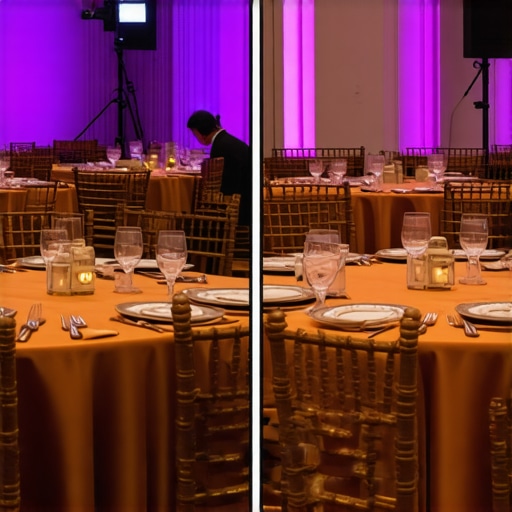
The noise trap that kills your event vibe
The biggest error I see in professional coordination is the ‘competition’ for attention. Many planners think that more activities mean more fun, but in reality, they just create sensory overload. You must stop putting the magician next to the party photo booth. The mechanical clinking and the bright flashes of the booth act as a constant cognitive distraction. This is a classic event furniture rental error that makes your magician invisible. Similarly, in outdoor settings, the wedding tent rental mistake that makes magic look cheap usually involves poor lighting placement. If you have harsh overhead LED floodlights, you kill the mystery. You need shadows to create depth. Even in backyard parties, a bounce house rental error that ruins celebrations is placing it so close to the adults that conversation becomes impossible. Strategic placement isn’t just about aesthetics; it’s about managing the cognitive load of your guests.Maintaining the atmosphere isn’t just about the initial setup; it is about the tools you keep in your pockets to fight the inevitable energy dips that happen four hours into a gala. I never walk into a high-stakes gig without my ’emergency response’ kit. For me, this includes a high-density neoprene close-up mat because, as I have learned the hard way, choosing the best surface for coin magic is non-negotiable for professional execution. If you are performing on a sticky table or an overly slick linen, your technical precision is dead in the water. I always refer back to the technical foundations laid out in S.W. Erdnase’s ‘The Expert at the Card Table,’ a niche manual for card mechanics that emphasizes how the physical conditions of the ‘field’ are just as vital as the performer’s technique. When the energy starts to flag during a transition, I immediately implement the simple stage setup fix that makes magic pop by physically moving the focal point closer to the audience.
How do I maintain the magic when the room starts to sag?
The secret to long-term engagement is anticipating the ‘trough’—that predictable moment when the adrenaline of the event wears off. In wedding environments, this usually happens in the gap between the ceremony and the formal meal. This is why your wedding catering wait needs a table-hopping magician to act as a social lubricant while the kitchen is under pressure. To keep the experience high-end, I even provide my clients with nacho machine rental tips for keeping your hands clean because nothing ruins a custom deck of cards—or a guest’s perception of luxury—faster than grease and salt. Looking ahead, I predict we will see a massive shift toward ‘phygital’ experiences where AI-driven narratives are triggered by physical, tactile sleight-of-hand movements. We are moving away from passive screens and back toward the wonder of the tangible. 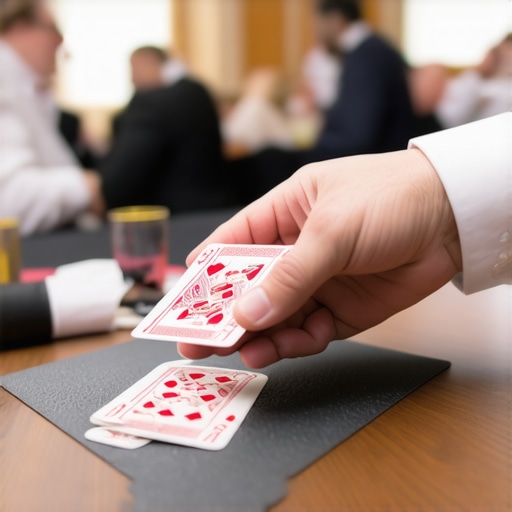 My advice for your next big project is simple: stop looking for the next expensive gadget and start mastering the smaller, high-impact interactions that prevent post-lunch meeting fatigue. Try implementing a three-minute ‘mystery break’ in your next strategy session and watch the collective cortisol levels drop as curiosity takes over.
Hard-Won Lessons from the Back of the Ballroom
Over the years, I have realized that the most expensive equipment often provides the least engagement. One major specific wedding coordination error that cuts magic short is just as prevalent in the corporate world: failing to respect the natural ebb and flow of attendee energy. While a mechanical bull rental offers 3 ways to keep waiting guests entertained, it often creates a wall of noise and physical separation that prevents deep connection. I have learned that a true ‘wow’ factor should act as a bridge between individuals, not a barrier. Furthermore, never underestimate the power of the physical environment; implementing the sightline fix for event furniture rental layouts at corporate galas is the fundamental difference between a captivated audience and a room full of people checking their watches. The focus must always remain on the human element, not the props.
The Gear and Wisdom I Trust for Lasting Impact
If you are looking to start implementing these psychological principles, I highly recommend ‘Strong Magic’ by Darwin Ortiz, which dives deep into the psychology of mystery and audience perception. For the physical setup, I always consult my own checklist on how to pick event furniture rentals that do not block the view to ensure every guest feels included in the moment. I also keep a close eye on the tactic to blend magic into modern event design trends so that the entertainment feels like an organic, sophisticated part of the brand experience rather than a dated afterthought. These resources ensure that the impossible feels intentional and professional.
Your First Step Toward a More Engaged Team
Engagement is not something you can buy off a shelf; it is a state you must facilitate through curiosity. By introducing close-up magic into your next high-stakes corporate gathering, you are giving your team permission to drop their professional masks and be truly present. This sense of shared wonder is the most effective tool I have found for breaking down internal silos and humanizing technical environments that often feel sterile. When people wonder together, they work together. Have you ever seen an event stall or lose its energy during a transition? How did you handle it? Let me know in the comments below.