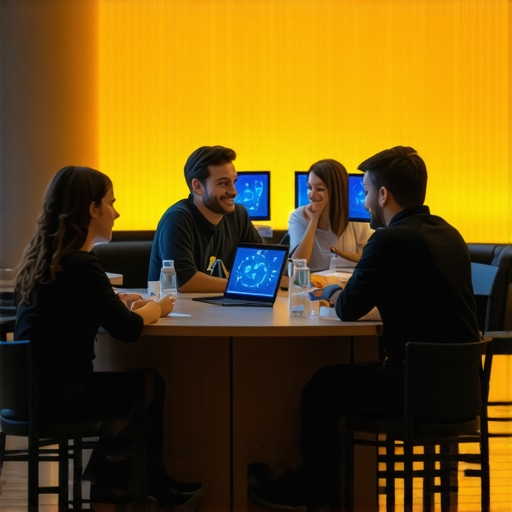
I’ll never forget the silence at my first major AI integration launch. We had spent six figures on 4K screens, professional event lighting rental, and custom-coded interactive apps. I thought we were being cutting-edge. Instead, I stood in the back of the room and watched eighty executives stare at their phones while a robotic voice droned on. It felt like a sterile laboratory, not a celebration of innovation. I had made the ultimate mistake: I prioritized the “AI” and forgot the “Integration.” That’s where things always go wrong. We build these events to showcase efficiency, but we end up creating a “digital freezer” where no one wants to talk. Today, I’m going to show you how to thaw that ice. We’re going to talk about why shorter corporate keynotes get higher ratings from employees and how to use analog surprises to make your digital future feel like something people actually want to be a part of. Have you ever felt that awkward, cold “tech-event” silence? I’d love to hear about your most cringeworthy corporate moment in the comments below.
Stop Letting Technology Kill Your Event Atmosphere
Early in my career, I tried to replace a human greeter with a sleek tablet-based check-in system for a high-stakes AI seminar. I thought it was clever. It was a disaster. Guests felt ignored from the moment they walked in, and that cold feeling lingered throughout the night. I’ve since learned that the more complex the technology you’re introducing, the more “primitive” and human your engagement needs to be. For instance, we found that interactive magic enhances your AI integration launch by providing a tactile bridge between abstract code and the real world. Research from the Journal of Applied Psychology suggests that humans are significantly more likely to retain information when it’s delivered through high-arousal social interactions rather than passive observation. By injecting humanizing technical meetings through strategic sleight-of-hand, we transform a clinical product launch into a memorable experience.
Is live entertainment actually worth the hype at a tech launch?
You might be thinking, “We’re a serious software firm; we don’t need tricks.” But you aren’t just selling software; you’re selling a change in human behavior. That requires trust. When people laugh together or gasp at a shared mystery, they stop being skeptical users and start being a cohesive team. In the sections below, we’re going to dive into the specific ways you can blend high-tech with high-touch, from rethinking your floor plan to choosing the right live band booking or immersive guest experiences that don’t feel like a forced HR exercise.
Design a Layout That Forces Human Interaction
You can’t expect guests to mingle if you’ve parked them in graveyard rows. I remember a launch for a logistics AI where we used standard event furniture rental—rigid, heavy chairs facing a massive LED wall. The energy was flatline. People stayed in their silos because the physical environment didn’t permit movement. Now, I advocate for ‘scattered’ seating. Think of your floor plan like a circuit board; the guests are the current, and you need to keep them moving to avoid a short circuit. Use furniture that doesn’t block the view and creates natural pockets for conversation. If you are outdoors, remember that poor tent layout can ruin the flow, whether it’s a gala or a product launch.
Ditch the Powerpoint Bloat for Impact
We’ve all been there: the forty-five-minute slide deck that feels like a hostage situation. If you want people to actually care about your AI integration, you have to realize that shorter corporate keynotes prevent post-lunch fatigue. I once saw a CEO cut his speech from 30 minutes to eight. He used those extra 22 minutes to have a table-hopping magician demonstrate ‘invisible data transfer’ using playing cards. The audience didn’t just understand the concept; they felt it. This is why humanizing technical meetings through strategic sleight-of-hand is so effective—it turns a dry update into a visceral memory.
Manage the ‘In-Between’ Moments with Precision
The most dangerous part of any event is the ‘transition’—the time between the keynote and the cocktail hour. This is where you lose your audience to emails and Slack. I once tried to bridge this gap with a fancy app, but interactive event apps often kill real networking because people just end up staring at another screen. Instead, use a ‘buffer’ entertainer. A close-up magician or a live musician creates a reason for people to keep their heads up. If you’re dealing with long queues—perhaps for food or even luxury restroom trailers at an outdoor venue—entertainment acts as a social lubricant. By applying timeline management moves that stop stalls, you keep the momentum high.
Why Tactical Lighting is Your Best Friend
Don’t underestimate the power of event lighting rental to shift the mood from ‘office’ to ‘innovation hub.’ Shadows are your friend; they create intimacy. At a recent fintech launch, we used focused spotlights to guide eyes toward interactive stations. It prevented the ‘airport lounge’ feel and made the product launch event feel exclusive. By integrating lighting secrets that enhance illusions, you can ensure your speakers and performers look like wizards, not just middle managers in a spotlight.Let’s dig deeper into what I call the “Museum Effect.” You’ve likely seen it: a high-budget launch where everything looks stunning, but guests are afraid to touch the displays or approach the staff. This usually happens when you prioritize the aesthetics of product launch events over the psychological safety of the attendee. I’ve found that even with the most expensive event photography services, if your guests feel like props rather than participants, your gallery will just be a collection of people looking at their watches. To avoid this, you need to turn a standard surface into a tool for connection; for instance, learning how to turn a standard cocktail table into a lead magnet creates a natural zone for low-pressure interaction.
The Flooring Mistake That Silently Sabotages Your Message
One of the most common ‘Oops’ moments involves event tent rental. Many planners assume that square footage is the only metric that matters, but they forget that an uneven surface is a cognitive load. If your guests are worried about their heels sinking into the grass or their chair wobbling, they aren’t listening to your pitch. In my experience, choosing the best flooring for level stage magic or high-end networking is non-negotiable. It provides a literal foundation for authority. Without it, you’re just a person in a tent; with it, you have a professional stage.
What happens when your ‘seamless’ tech becomes a physical barrier?
A common myth is that hyper-personalization services or immersive guest experiences require more screens. In reality, the most ‘immersive’ thing you can provide is a shared moment of wonder. A study published in the International Journal of Event and Festival Management highlights that ‘Social Presence’—the feeling of being with others—is the primary driver of attendee satisfaction, far outweighing technical complexity. When you rely too heavily on automated systems, you risk ‘lead bleed.’ I always tell my clients that stopping lead bleed requires human intervention that tech simply can’t mimic.
Why Fifteen Minutes is the New Gold Standard
We often think we need an hour to explain a new AI integration. We don’t. In fact, shorter corporate keynotes increase information retention by respecting the audience’s cognitive limits. I’ve seen live band booking or close-up magic used as a much more effective way to illustrate complex concepts than a forty-slide deck. Instead of telling them how ‘flexible’ your software is, show them something impossible with a deck of cards. It makes the abstract concrete. If you’re planning an outdoor event, don’t forget that luxury restroom trailers are the most important part of your venue infrastructure—if the basics aren’t high-end, your ‘cutting edge’ tech will feel like a facade. Have you ever fallen into the trap where the ‘wow factor’ actually pushed people away? Let me know in the comments.I’ve realized over the years that the ‘wow’ is easy; the ‘keep it going’ is hard. To maintain the prestige of product launch events, I rely on a very specific toolkit that doesn’t include a single HDMI cable. First, I never walk into a venue without my Sennheiser G4 wireless units. Why? Because the second a CEO’s mic crackles during shorter corporate keynotes that pack a punch, the illusion of authority evaporates instantly. I also swear by the ‘Bicycle Mandolin Back’ playing cards for close-up magic. Unlike standard retail decks, they are designed to withstand the humidity often found in event tent rental environments without warping. When you are performing the secret move for building instant executive trust, you cannot have a card stick to your thumb because of a cheap finish. For my lighting, I’ve moved entirely to iPad-based DMX control. It allows me to adjust the event lighting rental atmosphere in real-time while walking the floor, ensuring the shadows stay exactly where they need to be to hide a secret or highlight a speaker. Using the subtle tactic for improving live event production quality means being mobile, not tethered to a soundboard.
How do I keep my multi-day event from becoming a boring slog?
The secret isn’t more tech; it’s modularity. If you show your best immersive guest experiences on day one, day two feels like a hangover. I recommend ‘layering’ your engagement. Start with hyper-personalization services like custom digital badges, then introduce a live band booking for the evening, and save the close-up magic for the final day’s ‘fatigue’ hours. By utilizing choosing the best flooring for level stage magic, you ensure your entertainers have a consistent platform regardless of the venue’s natural terrain. The Event Safety Alliance technical manual emphasizes that physical stability is the silent hero of long-term engagement; if guests feel physically off-balance, they will disconnect from your message. I predict that the next five years will see a massive shift toward ‘Phygital’ elements—physical objects that trigger digital responses without a screen in sight. Imagine a guest picking up a piece of sustainable event decor using natural materials for better illusions, and having it instantly update their digital profile via RFID. This is the ultimate way to avoid the trap where virtual event production errors cost you credibility by making the tech feel invisible and secondary to the human touch. For your next launch, I challenge you to ditch the 40-minute deck and try one specific advanced tip: spend ten percent of your tech budget on the ‘invisible’ infrastructure—the audio reliability, the floor leveling, and the analog surprises. Trust me, your ROI will be higher than any LED wall could ever provide.
The Reality of Launching Tech Without a Soul
Working in the trenches of product launch events has taught me that the biggest threat isn’t a software bug; it’s a bored audience. I’ve seen million-dollar budgets evaporate because the planners forgot that humans need a reason to look up from their phones. One major lightbulb moment for me was realizing why your corporate event entertainment is leaving money on the table—it is because we often treat it as an afterthought rather than a strategic tool. If you want to keep the energy high, you have to learn how to coordinate your party photo booth with a magic act so that guests are constantly engaged in different ways. Always remember that the logistics, like your event tent rental or the event photography services you choose, are there to support the story you are telling, not to be the story itself.
Gear and Wisdom to Keep in Your Back Pocket
To pull off a truly seamless immersive guest experience, you need a toolkit that handles the unexpected. I never go into a high-stakes meeting without a clear plan for the ‘white space’ in the schedule. Using checklists for professional engagement ensures that no detail, from the event insurance services to the microphone batteries, is left to chance. I also recommend looking into ways to boost virtual production quality if you are running a hybrid event. Trustworthy gear like Sennheiser wireless systems and iPad-controlled event lighting rental are non-negotiable for maintaining the ‘wow factor’ without the technical headaches of traditional wired setups.
Put Your Audience First Every Time
The future of hyper-personalization services isn’t about more data; it’s about making people feel seen. When you use tactics for building instant executive trust, you aren’t just performing; you’re connecting. We have to move toward a model where virtual event production needs more human interaction to survive. Whether you are booking a live band booking or a world-class magician, make sure they understand your core message. Technology will change, but the need for a shared, jaw-dropping moment remains constant. What is the one analog element you are planning to add to your next digital-heavy launch to keep things human? Let me know in the comments below!