
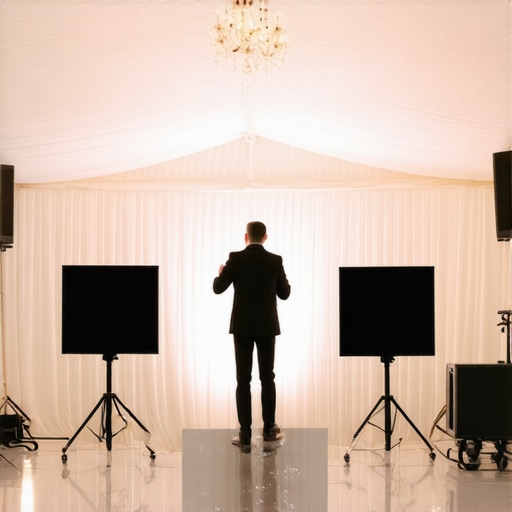
I stood there, sweat beads forming on my forehead, not because the trick was hard, but because the wind was howling through a gap in the vinyl and my audience couldn’t hear a word I was saying. It was a high-stakes garden party, and I had foolishly assumed that a tent was just a roof over our heads. Instead, it was an acoustic nightmare that swallowed my patter and spat out an unintelligible echo. I spent forty minutes shouting over the flapping canvas, feeling my professional reputation slip away with every gust. That was the day I realized that if you don’t control the environment, the environment will most certainly control you. This isn’t just about volume; it’s about the texture of the sound. Magic requires nuance—the gentle riffle of a deck of cards or the subtle clink of a silver dollar. In a poorly managed tent, those sounds are lost.
Stop Letting Your Venue Eat Your Best Lines
[IMAGE_PLACEHOLDER]
We’ve all been there. You’ve practiced your sleight of hand until your fingers bleed, but none of that matters if the sound of a passing truck or a stiff breeze makes your punchline vanish into thin air. When you dive into an event tent rental, you aren’t just renting a shelter; you are building a temporary theater. Most performers make the mistake of thinking about the visual look first, but sound is what builds the intimacy required for real mystery. I used to ignore the floor, but I learned the hard way that a bare grass floor inside a tent is an acoustic black hole. Now, I always suggest a dance floor rental layout even if no one is dancing, just to give the sound a surface to bounce off of in a controlled way. Using a red carpet runner rental isn’t just about the V.I.P. feel; it actually serves as a critical sound dampener for high-frequency echoes that bounce off the plastic side-walls.
Does a Canvas Roof Actually Kill the Vibe?
You might be skeptical. You’re thinking, “It’s a tent, people expect it to be a bit loud.” But here is the truth: according to the National Fire Protection Association (NFPA), the standard weight of rental tent vinyl is designed for fire retardancy and durability, not for sound fidelity. This material creates a drum-head effect that can amplify rain or wind noise by up to 20 decibels. If you aren’t careful, you’re performing inside a giant percussion instrument. This makes it nearly impossible to maintain the cone of silence needed for a successful mentalism set. To fix this, I started looking at how to turn a standard canopy rentals setup into a private magic theater by using heavy drapes and strategically placed linen rentals to dampen those harsh reflections. Have you ever had a show ruined because the venue sounded like a literal tin can? It’s a gut-wrenching feeling, but it’s entirely preventable with a few specific hacks. Today, I’m going to show you how to audit your rental checklist to ensure your next show isn’t just seen, but heard with crystal clarity. We will look at how to position your stage to avoid corner-loading bass frequencies and why the open air look might be sabotaging your audio more than you think.
The first thing you have to fix is the physics of the room. A tent is a void; you have to give it a heart. This is why your canopy rentals need a central focal point to stop guest drift. Without a clear stage area—even if it is just a small 10×10 corner—your audience will treat your show like background noise rather than a main event. I once performed against a transparent vinyl wall looking out at a busy parking lot. Guests were more interested in the passing headlights than my card manipulation. I realized then that a solid backdrop isn’t just for hiding props; it is for trapping attention. Using a specific event tent rental tactic for creating a pop-up mystery theater involves more than just stakes and ropes; it requires creating a visual end to the room so the eyes have nowhere else to go.
Stop the Drift with a Clear Stage Center
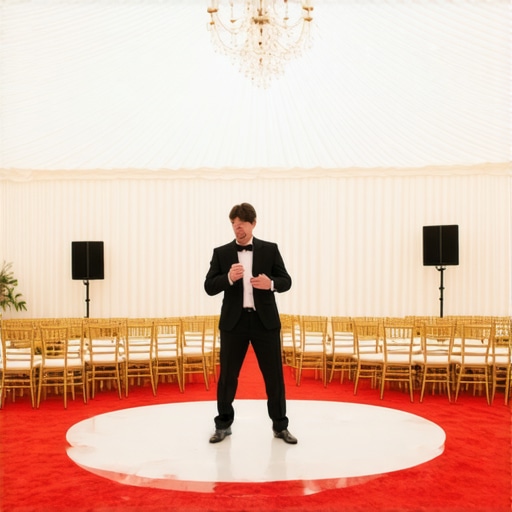
Next, you have to look at the chairs. You might think more space is better for guest comfort, but why your chiavari chair rental layout might be too cramped for magic is actually a common misconception—the real danger is being too spread out. If people are too far apart, the laughter contagion dies. I have seen incredible mentalism sets fall flat because the audience was seated in loose clusters of four with wide aisles between them. To fix this, I always double-check the event tent rental checklist for high stakes illusion shows to ensure the seating is tight enough to create a collective experience. When I am booked for intimate gatherings, I specifically show the hosts how to turn bridal shower services into a magical guest experience by clustering chairs in a semi-circle rather than a rigid, spaced-out classroom style. This physical proximity forces a shared reaction, turning a group of individuals into a unified audience.
Kill the Echo with Heavy Fabric
Finally, you have to address the vocal vacuum. In a trade show environment, this is even more critical because the ambient noise is staggering. I have found that the trade show booth tactic that actually stops foot traffic isn’t a flashy neon sign; it is a controlled acoustic space where the visitor can actually hear the pitch. If you are performing outside, remember the outdoor party tent mistake that makes close-up magic impossible is neglecting the wind noise. Wind doesn’t just mess up your stage reset; it creates a constant white noise that fatigues the audience’s ears. I solve this by using heavy side-walls and strategic linen rentals draped over hard surfaces to soften the environment. Think of it like this: your voice is a flashlight, and the tent walls are mirrors. If the mirrors are angled wrong or vibrating in the wind, the light never reaches the back of the room. By dampening the bounce, you ensure every whisper is as sharp as a shout.
Pack Them In to Build the Energy
I remember a corporate gala in a drafty warehouse where the chairs were spread out like a socially distanced waiting room. I spent the first ten minutes just begging people to move closer, losing my momentum before the first trick. Now, I insist on a layout that prioritizes density. This is especially true when you are trying to guarantee more badge scans at a professional event. People gravitate toward crowds. If your seating looks sparse, people will walk right by. If it looks packed and exclusive, they will crane their necks to see what the fuss is about. This psychological pull is your best friend when the venue is essentially a giant plastic bubble in a field.
Most people think that scaling up means buying more floor space, but that’s a rookie mistake that actually dilutes your impact. In my twenty years of working these rooms, I’ve seen million-dollar booths feel like ghost towns because they lacked a soul. Everyone says you need a massive 40×40 island to be seen, but in my experience, a smaller, high-energy space out-converts a sprawling layout every single time. Why? Because density creates gravity. When you over-expand, you lose the ability to control the narrative. This is why why your event rentals strategy needs a human element to succeed—it’s not about the square footage of the vinyl; it’s about the emotional tension you create within it.
Why Your Massive Trade Show Booth is a Lead Killer
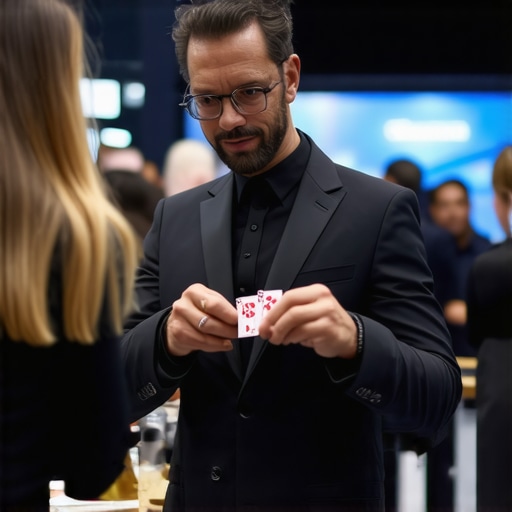
The ‘Oops’ factor most planners fall into is what I call the ‘Automation Trap.’ They invest heavily in AI event personalization and interactive screens, thinking the tech will do the work for them. But tech often acts as a physical barrier. If a guest has to interact with a tablet before they interact with a person, you’ve already lost the lead. I’ve seen this time and again: the real reason your experiential networking ideas aren’t working is usually because you’ve prioritized the interface over the intimacy. True immersive guest experiences don’t happen on a 4K monitor; they happen in the two feet of space between the performer and the attendee. When you use the close-up magic performances strategy for high-traffic trade shows, the goal isn’t just to show a trick; it’s to break the digital fourth wall and bring the guest back into the room.
Is Your AI Strategy Just a Fancy Distraction?
Let’s talk about the nuance of modern engagement. If you’re wondering why hyper-personalization services are the only way to engage Gen Z attendees, it’s not because they love algorithms. It’s because they can smell a generic pitch from across the hall. Research from the Center for Exhibition Industry Research (CEIR) shows that sensory engagement is the top driver for booth retention, yet most planners focus solely on visual branding. I’ve found that using the micro-event planning move that eliminates guest social anxiety—creating small ‘huddles’ within a larger conference—works far better than a standard stage presentation. It’s about creating a ‘theater of the mind’ where the attendee feels like the show is happening for them, not at them. This is how you guarantee more badge scans without ever sounding like a salesman. Have you ever fallen into the trap of thinking more tech equals more leads? Let me know in the comments. I’m curious if you’ve seen the same ‘tech-wall’ effect that I have. To really win, you have to learn how to secure better event rentals deals without sacrificing entertainment quality, focusing your budget on the things that actually drive pulse rates, not just those that look good in a catalog.
I’ve spent the better part of two decades refining the invisible machinery that keeps a show running when the venue is literally trying to fight you. For me, the secret sauce isn’t just in the sleight of hand; it’s in the digital ecosystem that supports the performance. I’ve found that knowing how interactive event apps can be used to secretly assist magicians is the difference between a good trick and a moment that feels like genuine mind-reading. By integrating a low-latency app into my set, I can gather data points from the audience before I even step on stage, fueling the move that makes hyper-personalization services feel like real magic. But you can’t just throw tech at a problem and hope it sticks. You need a maintenance plan that ensures your equipment survives the chaos of a three-day expo.
The Secret Tools I Use to Stay Sharp
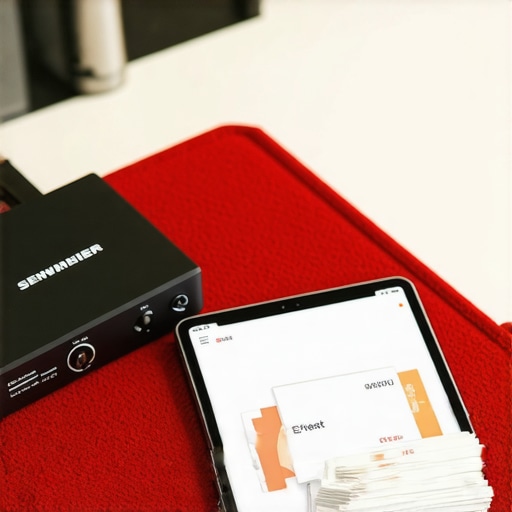
When I’m in the thick of a high-traffic show, my most valuable tool is my frequency scanner. Convention centers are a wireless nightmare. According to the technical documentation from Shure, the 2.4GHz spectrum in a typical trade show hall is so congested that standard wireless microphones will almost certainly experience ‘RF dropout’ without proactive frequency coordination. This is why I use the Shure Wireless Workbench software to scan for ‘clean’ air before my first set. It’s the same discipline I apply to my digital presence. If your lead generation is lagging, the one move that finally fixes stagnant google maps rankings for entertainers is often as simple as cleaning up your backend data. I’ve seen talented performers fail because they ignored the ‘boring’ stuff like SEO or signal strength.
How do I maintain my gear’s performance over long events?
Maintenance isn’t just about polishing your silver dollars; it’s about protecting your data integrity. I’ve learned that why messy address data is quietly costing your business map views is a lesson that applies to both your Google profile and your booth’s CRM. If your attendee data is a mess, your follow-up will be a mess. Between sets, I’m constantly auditing my capture methods to ensure every badge scan is clean. This attention to detail scales. In the future, I predict we will see AI-integrated ‘smart floors’ that track guest movement in real-time, allowing us to adjust our performance energy based on crowd density. To keep your business growing in the meantime, make sure you are using the specific content moves that get magic services ranked locally so you aren’t just winning in the booth, but winning on the search page as well.
Don’t Let Your Digital Presence Go Stale
Your long-term results depend on what happens after the tent comes down. I always tell my clients that a successful event is just the first chapter. To keep the momentum, you need to ensure your local authority is rock solid. I personally use the simple google map embed tactic that wins more local event leads on every post-event case study page. It anchors my work to a specific location and builds trust with future planners in that area. If you want to scale, stop looking for more tricks and start looking at the no-fluff google business profile checklist that actually books corporate gigs. Consistency in your digital ‘gear’ is just as important as the reliability of your wireless mic. I want you to try this: for your next gig, commit to a ‘tech-first’ audit of your booth. Swap one passive display for an interactive huddle and see how it changes the energy. You’ll find that when the logistics are flawless, the magic takes care of itself.
The Moment I Stopped Fearing the Empty Room
After two decades, I’ve realized that the ’empty’ space in a rental tent is actually your greatest enemy. I once thought that a larger footprint meant more prestige, but now I know that density is the only thing that creates gravity. If you can’t get people to shoulder-to-shoulder, the energy escapes through the vinyl. This is why I focus on how micro-event planning can focus on quality over quantity. It’s better to have thirty people captivated in a tight circle than three hundred people drifting around a massive hall. My other lightbulb moment? Tech should be invisible. If the audience sees the router or the tablet before the trick, you’ve broken the spell. Use tools like interactive event apps to secretly assist your performance, but never let them become the centerpiece. Lastly, always remember that proximity equals trust. The closer the guest is to the performer, the more likely they are to remember your brand long after the event ends.
My Performance Survival Kit
When I’m auditing a venue, I rely on a few non-negotiables. First, the Shure Wireless Workbench is my go-to for ensuring my audio doesn’t drop out in crowded convention centers. Second, I’m a huge advocate for using the no-fluff checklist for making your google profile irresistible to event planners; because your performance starts months before the gig when the planner first finds you online. I also highly recommend the book ‘The Art of Gathering’ by Priya Parker—it completely shifted how I view why community driven events often fail the information gain test. These tools ensure that my ‘digital gear’ is just as sharp as my physical props.
Go Build Your Own Mystery
The landscape of events is shifting rapidly, but the need for human connection remains constant. Whether you are navigating the latest event design trends or trying to figure out why trade show magic is the ultimate ROI tool for tech brands, the goal is always the same: make them feel something. Don’t be afraid to experiment with tighter seating or unconventional venue decoration services. When you control the environment, you control the experience. Use the simple tactic to scale local seo traffic to keep your pipeline full, and then let your skill do the rest. Have you ever had a specific layout completely change the energy of your show? Let me know in the comments below!