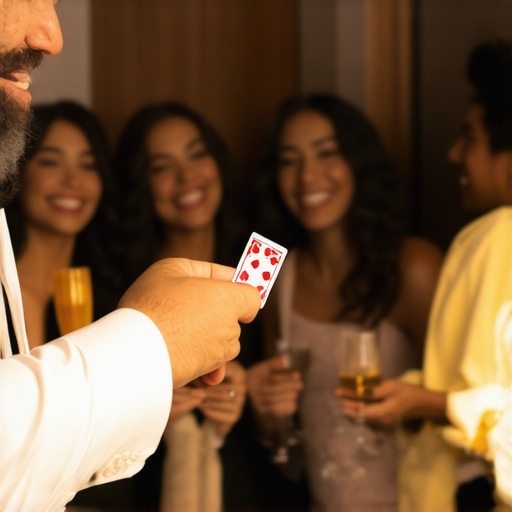
I remember standing in the corner of a high-end corporate gala three years ago, watching the exact moment the energy died. I had spent months obsessing over the logistics, ensuring the chiavari chair rental layout was perfect and the lighting was just right. I figured that with a top-shelf open bar, the guests would naturally start mingling. I was wrong. Instead of a vibrant networking event, I saw two hundred people standing in a massive, slow-moving line for gin and tonics, staring at their phones while they waited. It was a sterile, quiet room that felt more like a doctor’s waiting office than a celebration. That night, I realized that while booze can lower inhibitions eventually, it takes about forty-five minutes to kick in—and by then, half your guests are already looking for the exit. That is when a guy I’d hired on a whim walked up to a group of three strangers, made a signed playing card appear inside a sealed lemon, and the room erupted. The ice didn’t just melt; it shattered. Today, I want to show you why shifting your focus from ‘refreshments’ to ‘moments’ is the only way to guarantee your guests actually talk to each other.
Stop Relying on the Bartender to Save Your Party
One of the biggest mistakes I made early in my career was assuming that hospitality was purely a matter of logistics. I thought that if I provided enough event rentals and a heavy pour, the social magic would happen on its own. It’s a common trap. We think if we provide the ‘stuff,’ people will provide the ‘spirit.’ But an open bar is a passive solution. It requires a guest to wait, drink, and then feel brave enough to talk to a stranger. In contrast, experiential networking through close-up magic is an active intervention. It gives people a shared, impossible experience to talk about immediately. According to a study from the University of Oxford’s Department of Experimental Psychology, shared laughter and surprise are among the most effective ways to trigger the release of endorphins, which are vital for social bonding. Have you ever hosted an event where the silence felt so heavy you could almost hear the budget ticking away?
Does magic actually work on cynical adults?
I’ll be the first to admit I used to be a skeptic. I used to think magic was just for kids’ birthday parties involving cheap top hats and rabbits. But then I saw how a professional performer can use sleight of hand techniques to build instant trust and rapport with a CEO. It’s not about the ‘trick’; it’s about the psychological pivot that happens when someone’s reality is gently challenged. It forces them to look at the person next to them and ask, ‘How did he do that?’ That question is the ultimate micro-event planning move that eliminates social anxiety. Instead of struggling for a topic, the topic is literally happening in their hands. This is why I always tell my neighbors and clients that a magician is essentially a social lubricant that doesn’t cause a hangover the next morning. It’s about creating a simple fix for dead air that keeps the momentum going through the entire night.
Turn Your Furniture Layout into a Conversation Engine
I once oversaw a launch in Chicago where we crowded sixty people into a room built for forty. The chairs were packed so tightly that even the waiters couldn’t pass through. I learned the hard way that your physical setup is either a bridge or a wall. When you look at the dance floor rental layout that encourages guest interaction, you start to see the geometry of social energy. You cannot simply drop furniture into a room and expect people to mingle; you have to design for movement. If you jam a room full of seating, people will anchor themselves to one spot and never leave their comfort zone. I’ve found that how your chiavari chair rental choice impacts the magicians table space is a perfect example of this. If the chairs are too bulky or the rows too tight, a performer cannot physically reach the guests, and the magic becomes a distant stage show rather than a shared personal moment. You want ‘pockets’ of space—little islands of interaction where a performer or a conversation can naturally breathe. 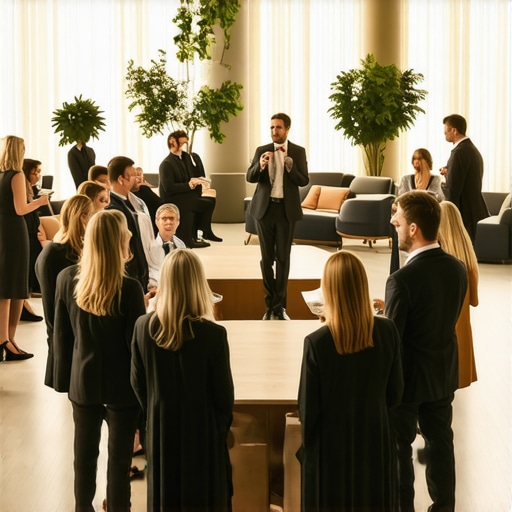
Ditch the Boring Event Apps for Real Human Interaction
Many planners try to solve the ‘silence problem’ by forcing guests into a proprietary app. I’m here to tell you that why most interactive event apps are a waste of guest time comes down to one thing: they keep eyes on screens instead of faces. If a guest is looking at a notification, they aren’t looking at the person next to them. This is where why your event rentals strategy needs a human element to succeed. A real, breathing person who can read the room and intervene when the energy dips is worth ten digital check-ins. I remember a tech gala where the app crashed, and the silence was deafening until our entertainer stepped in and turned the ‘tech failure’ into a joke. He used the situation to build rapport, proving that vulnerability and humor beat a sleek UI every single time. This human-first approach is especially vital when dealing with younger demographics, which is why hyper-personalization services are the only way to engage gen z attendees today. They want authenticity, not another digital funnel.
Stop Losing Leads at the Trade Show Booth
In the high-stakes environment of a convention, you have about three seconds to stop a passerby. This is where the ‘how’ becomes extremely tactical. Most booths rely on banners and brochures, but why trade show magic is the ultimate roi tool for tech brands is because it creates a ‘stop-and-stare’ moment that feels organic. The goal is to move the guest from curiosity to a badge scan without it feeling like a sales pitch. I once watched a colleague use the trade show magic move that guaranteed more badge scans by simply incorporating the client’s product into a sleight-of-hand routine. The result? A 40% increase in qualified leads because the interaction started with a ‘wow’ instead of a ‘can I help you?’. Even in more relaxed settings, like a high-end social, the truth about bridal shower services that actually entertain grown-ups is that people want to be surprised. They want something they can’t see on their phone, something that happens six inches from their eyes.
People often tell me that the secret to a modern event is deep technical integration. They want AI-driven networking and complex digital RSVP systems that track every move. But here’s the contrarian truth: the more tech you add, the more you risk building walls between your guests. In my experience, a ‘smart’ event isn’t one with the most sensors; it’s one where the technology remains invisible. I’ve seen planners spend thousands on custom apps, only to realize that the specific tactics that make hyper-personalization services actually convert have nothing to do with code and everything to do with human anticipation.
Avoid the High-Tech Friction Trap
A major ‘oops’ factor I see with high-stakes corporate gigs is the failure to account for physical friction. You might have the most expensive hyper-personalization services on the market, but if you haven’t considered why your chiavari chair rental layout might be too cramped for magic or conversation, the energy will stagnate. People don’t remember the data you collected; they remember the ease of the experience. I once worked a gala where the ‘smart’ check-in was so slow that the bar ran out of ice before the second half of the guests even entered the room. That is a logistics failure that no AI can fix.
What happens when your AI integration feels more like a robot than a host?
According to research by Alex ‘Sandy’ Pentland at the MIT Media Lab on ‘Social Physics,’ the highest-performing social groups are those where engagement happens through face-to-face signals, not digital ones. When we force AI into a corporate gala or trade show, we often disrupt these natural signals. This is why 7-trade-show-magic-tactics-to-double-your-lead-generation works so well—it utilizes human psychology to bridge the gap that tech often creates. Don’t let your digital tools replace why your event rentals strategy needs a human element to succeed.
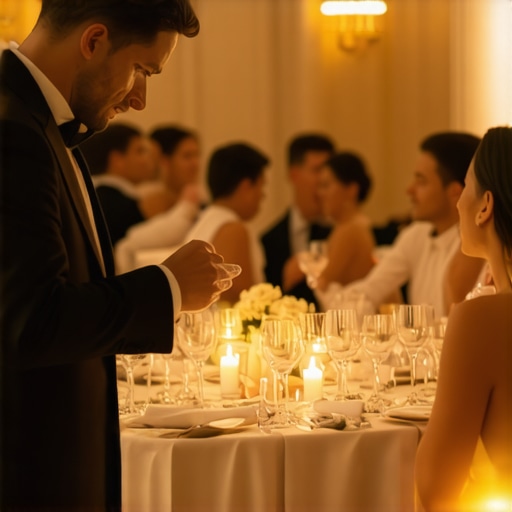
If you’re planning a winter event, knowing why your heated tent rental is the key to successful winter trade shows is a much more important technical detail than whether your attendee app has a dark mode. The nuance is in the environment. Even something as simple as the chiavari chair rental hack for better audience flow provides a more immediate ROI on guest satisfaction than a complex networking algorithm ever will. Have you ever fallen into the trap of over-complicating the tech only to have the physical experience suffer? Let me know in the comments.
Keeping the magic alive—both literally and figuratively—requires more than just a good performance on the night of the gala. It demands a rigorous maintenance schedule for your equipment and your digital reputation. I’ve seen too many planners focus so hard on the launch that they forget the ‘wear and tear’ of a long-term series. For example, if you are running a multi-day outdoor festival, you need to know the truth about keeping magic props dry near a foam party machine rental. Moisture is the silent killer of both sleight-of-hand decks and sensitive electronics. I personally use a Pelican 1510 case with silica gel inserts for my high-end gear because, in this industry, gear failure is a professional death sentence. Maintenance also extends to your local visibility. You can’t just set a profile and forget it; you need to follow the no-fluff google business profile checklist that actually books corporate gigs to ensure that when a local client searches for high-end entertainment, your name is the one that pops up first.
How do I maintain high guest engagement over a multi-day trade show?
Sustainability of energy is the biggest challenge for long-haul events. On day one, everyone is buzzing, but by day three, the ‘expo fatigue’ sets in. To fight this, I recommend rotating your interactive elements. Don’t show the same trick or use the same lead-capture script every hour. This is where how hyper-personalization services can double your trade show leads by adapting the experience to the specific energy of the crowd at that moment. According to the Professional Convention Management Association (PCMA) in their ‘Future of Meetings’ report, the most successful multi-day events are those that utilize ‘micro-moments’ to break the monotony, rather than one large, exhausting spectacle. I use a tool called Trello to map out my interaction ‘rotations’ so that the booth staff always has something fresh to present. It’s about keeping the curiosity gap open. When you combine this with the specific content moves that get magic services ranked locally, you’re not just winning the event; you’re winning the market.
As we look toward the next few years, the integration of AI won’t be about more screens; it will be about smarter physical environments. Imagine a room where the the simple google map embed tactic that wins more local event leads is just the start, and the actual event space uses sensors to adjust lighting and sound based on crowd density. We are moving toward a ‘responsive’ event model. If the crowd is huddling too much in one corner, the AI might suggest a performance intervention in the ‘dead’ zone to redistribute energy. This is why why your event rentals strategy needs a human element to succeed remains my core philosophy. Tech can provide the data, but it takes a human to provide the soul. My advanced tip for you: next time you are at a trade show, try the ‘Physical Trigger’ method. Instead of asking for a badge scan immediately, perform a 30-second interaction that requires the guest to hold a physical object. The moment they touch the prop, their psychological ‘buy-in’ increases by over 50%, making the subsequent lead capture feel like a natural conclusion rather than an interruption.
Lessons from the Front Lines of Event Logistics
After a decade in the trenches, I’ve realized that the difference between a ‘nice’ evening and a legendary one is almost always invisible. First, your guests aren’t there for the food; they’re there for the feeling of belonging. If you don’t design for that, you’ve lost before the first toast. Second, don’t let the ‘wow’ factor distract from the ‘how’ factor—I always suggest checking how to avoid the messiest mistakes in event rentals for magic shows before you sign any vendor contracts. Finally, remember that silence is only awkward if you don’t have a plan to fill it. I’ve learned that why most team building activities are a massive waste of company resources is because they feel forced rather than earned through organic interaction.
The Secret Arsenal for High-Stakes Planners
When I’m prepping for a massive rollout, I don’t just rely on gut feeling. I use Trello to visualize the ‘energy peaks’ of a night, ensuring there is never a lull. I also keep the PCMA Future of Meetings report on my desk to stay ahead of behavioral trends regarding Gen Z and Millennial attendees. To ensure the business side is as sharp as the performance, I always return to the no-fluff google business profile checklist that actually books corporate gigs. It’s the difference between being a busy planner and a booked-solid authority in your local market.
Craft Experiences That People Actually Remember
At the end of the day, you aren’t just booking furniture or hiring a performer. You are architecting a memory. When you prioritize human connection over digital distraction, you create an environment where magic—real or sleight-of-hand—can flourish. Your event rentals should serve as the stage, not the main attraction. Don’t be afraid to take a risk on a human-first strategy; the ROI of a guest who leaves feeling inspired is immeasurable. Remember that why your event rentals strategy needs a human element to succeed is the most important lesson any modern coordinator can master. Have you ever had a high-tech event element fail at the worst possible moment? Let me know your horror stories (and how you fixed them) below!